
From Cautious to Confident: How to Choose the Best Forex Leverage
Leverage lets you trade with more money than you have. It can turn small wins into big profits. But it can also destroy your account in seconds. A small market move against you can erase all your funds. If the trade slips past your stop, you might even owe more than you deposited. It’s quick, brutal, and often irreversible.
If you're looking for a better chance at success, choosing the right broker matters. Dominion Options offers low-latency execution and tight spreads, which can help reduce the impact of slippage and high volatility. With precise order fills and competitive pricing, it's easier to manage trades even when using leverage. While no broker can remove risk, trading with a reliable platform like Dominion Options gives you better tools to face it.Trading in the forex market can be exciting. But it also comes with risk. One of the biggest decisions traders make is how much leverage to use. Choose well, and you can manage risk while growing your account. Choose poorly, and even a small move against you can wipe out your balance. One bad move could clear weeks or months of progress. If you’re using high leverage, even a tiny price swing can do real damage.
If you’re looking for a broker that supports smart trading, Dominion Options makes a strong case for traders who care about precision and cost. Their ultra-low spreads and tight pip pricing give you cleaner entries and exits. You don’t have to fight slippage or pay wide margins just to get into a trade. This matters most when every pip counts—especially for scalpers and day traders. Dominion also offers fast execution, transparent fees, and solid support. That gives traders the tools they need without the fluff.
Let’s look at how to pick the right leverage for your trading style, skill, and risk level.
What Is Leverage in Forex Trading?
Leverage lets you control more money than you have in your account. You borrow funds from your broker to open larger trades. For example, with 100:1 leverage, you can control $100,000 with just $1,000.

Bigger losses
This means your wins can be bigger. But your losses can grow just as fast. A trade moving a few points in your favor can feel like magic. But when it moves against you, it can sting just as fast. This is the trade-off that comes with increased position size. The more you borrow, the more pressure each pip puts on your account. Understanding this balance is key to managing the risks of high leverage trading.
Leverage is a tool. Like any tool, it can help or hurt. The key is using it wisely.
Why Leverage Matters in Forex Trading
High leverage can lead to fast profits. But it can also destroy your account if you’re not careful.
If a trade goes against you by even a small amount, you may face a margin call. That means your broker closes your trade to limit losses. You may lose all the money in that trade.
Leverage increases both reward and risk. That’s why choosing the right level is so important. If you’re still unsure, take a moment to read our article about forex leverage explained. It breaks things down simply so you can make smarter choices.
Common Leverage Levels in Forex Trading
Brokers offer different levels of leverage. These are common options:
- 1:1 (no leverage)
- 10:1
- 20:1
- 50:1
- 100:1
- 200:1
- 500:1
Some brokers even offer 500:1. That means for every $1 you deposit, you can trade $500. Dominion Options offers 500:1 leverage for those who know how to manage it. It’s a powerful option for skilled traders who want more flexibility without needing a large balance. This gives experienced traders more room to scale their trades without needing a large balance. It's a solid option if you're confident in your risk control.
But high leverage is not for everyone. In fact, most new traders should avoid it. If you’re thinking about using higher ratios, check our guide on the list of high leverage forex brokers. It can help you compare your options and choose wisely.
Start Small and Safe
Overtrading
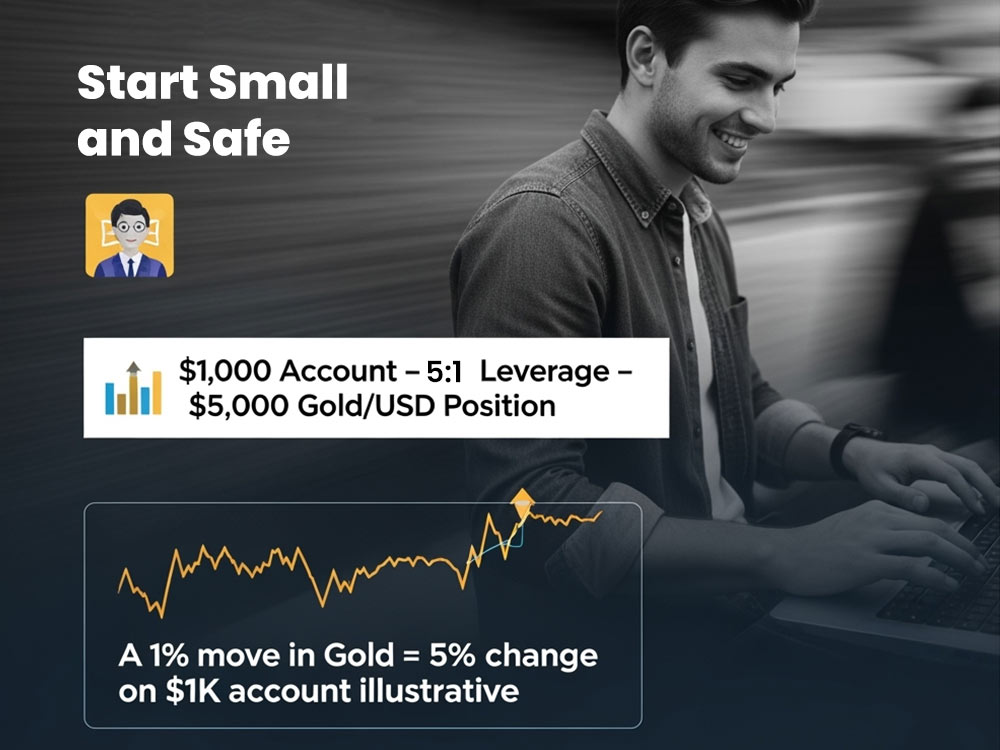
If you’re new to forex, keep your leverage low. Try 10:1 or even 5:1.
This gives you more room for error. It helps you focus on learning without blowing up your account. Say you want to trade XAU/USD (Gold vs US Dollar). With 5:1 leverage and a $1,000 account, you can control a $5,000 position. That’s enough to take part in the market without putting everything at risk. If gold moves $10 in the wrong direction, you won’t lose your whole account. It’s a simple way to gain experience while keeping losses manageable.
Many traders lose money because they start with too much leverage. They see big profit potential and dive in too fast. The market punishes that kind of rush. Learning how trades work takes time. It’s not just about entry and exit—it’s about timing, size, and emotion. If you’re new, focus on control, not speed. You’ll learn more, lose less, and build smarter habits.
For more help getting started, check out our article on forex trading for beginners. It covers the basics and gives you a stronger foundation.
Start small. Stay safe.
Understand Margin
Pressure to act fast
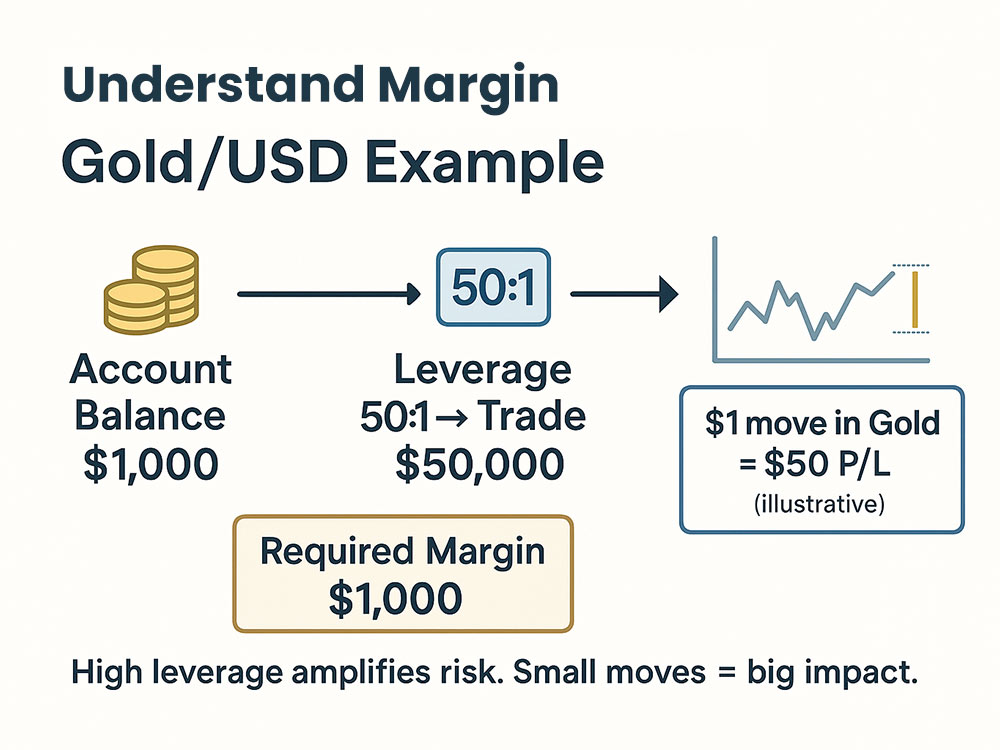
Margin is the amount of money your broker needs to open a trade.
For example, with 50:1 leverage, you need just 2% of the total trade size.
If you want to trade a $100,000 lot, you need $2,000 in margin.
If the trade goes against you, and your balance drops too low, your broker may close the trade. This is to protect the money you borrowed. Say you're trading Gold/USD and it moves $20 against you. That kind of move can hit hard if you're overleveraged.
This is where forex indicators can help. Tools like RSI, MACD, or moving averages can give you signals to enter or exit a trade. They help you spot potential risks before they turn into losses.
That’s why margin and leverage go hand in hand. Know both before you trade.
Real vs. Offered Leverage
Your broker may offer 100:1 leverage. But that doesn’t mean you have to use it all.
Real leverage is how much you actually use. It’s your total trade size divided by your account balance.
Let’s say your account has $10,000. You open a $20,000 trade. Your real leverage is 2:1. That means for every dollar you own, you’re controlling two. If you bumped that trade to $50,000, your real leverage would be 5:1. It's easy to let it creep up without noticing, especially when using multiple open positions. Always watch your real exposure, not just what the broker lets you access.
Using less than the maximum helps protect your account. Smart traders use only the leverage they need.
Match Leverage to Your Style
Your trading style should guide your leverage.
- Scalpers open many small trades throughout the day. Because they aim for quick moves, they often use higher leverage. But they also need tight spreads and strong discipline. A bad trade can hit fast. If you're trying this style, be sharp and stay focused. And check out our guide on scalping strategies—it'll give you a solid starting point without the fluff.
- Swing traders hold trades for a few days, aiming for bigger price shifts. They tend to use moderate leverage so they can ride out normal market noise. They often rely on indicators like moving averages and RSI to plan entries.
- Position traders stay in trades for weeks or longer. They look at long-term trends and usually keep leverage low to manage exposure. Patience and big-picture thinking matter more than speed.
Choose leverage that matches how you trade—not what looks exciting or risky. Your edge comes from consistency, not size.
Use Stop-Loss Orders
Limited risk management options
No matter your leverage, you need to control your risk.
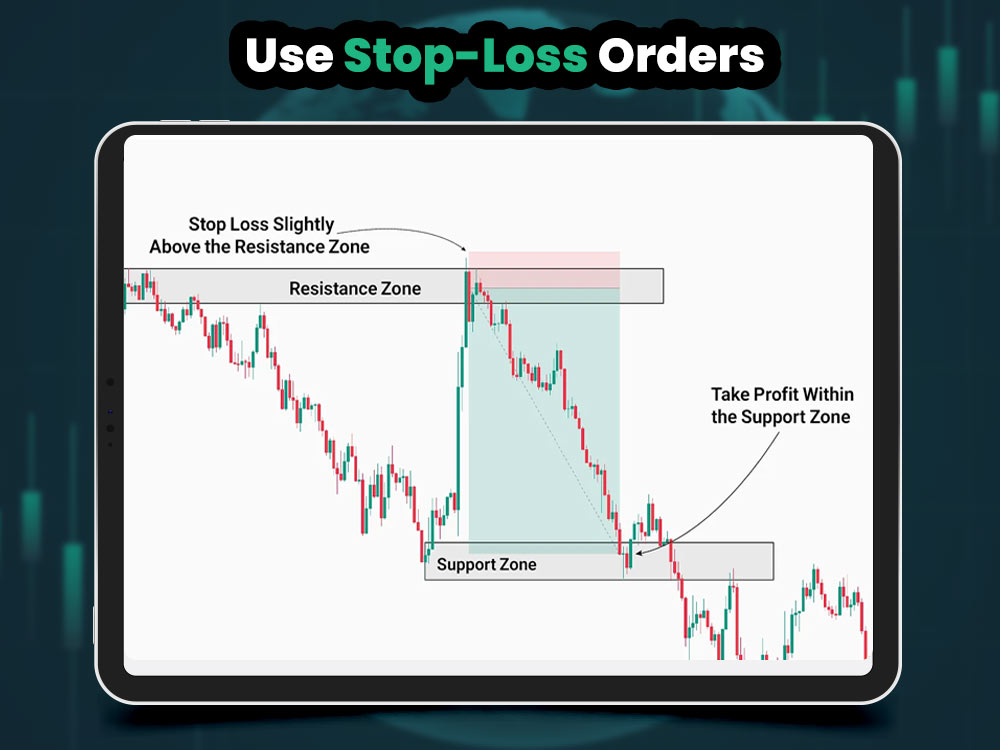
Always set a stop-loss order. This closes your trade once your loss hits a limit you can handle. It gives you control, not just protection.
Let’s say you’re trading EUR/USD and aiming for a 20-pip gain. Set your stop-loss so that if the trade goes against you by 10 or 15 pips, you're out. You take the hit and move on. No guessing. No hoping.
This habit keeps a small loss from becoming a big one. It also frees your mind from stress while the trade is active.
Good risk control is what separates long-term traders from gamblers. Even with high leverage, it’s your safety net. It also helps when you stick to the best currency pairs—like EUR/USD, USD/JPY, or GBP/USD. These pairs have high liquidity and tighter spreads, which gives you more stable trades. They're also more predictable with common indicators. That makes them a better match when you’re managing risk with tight stop-losses.
How Much Should You Risk?
How Much Should You Risk?
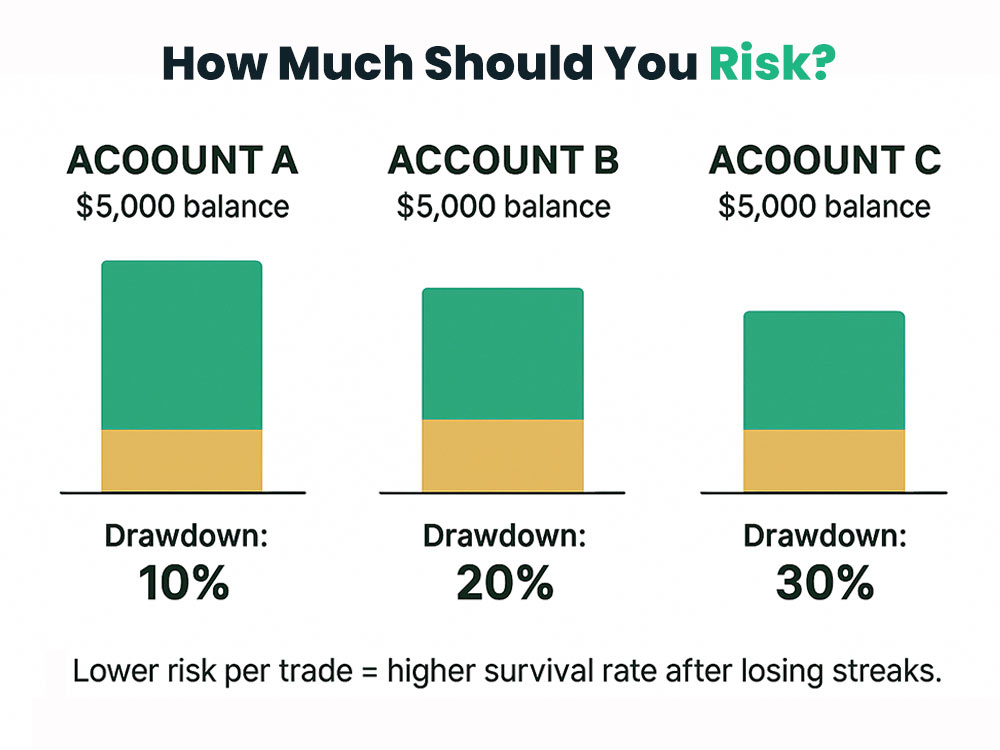
A common rule is to risk no more than 1% to 3% of your account on any one trade.
If you have $5,000, risk $50 to $150 per trade.
This helps you stay in the game even after a few losses.
It also makes sure you don’t let one trade ruin your progress. Many new traders underestimate the risks of high leverage trading. They see the upside but ignore how fast a trade can go bad. If you overexpose your account and skip proper risk control, one trade can cost more than just money—it can shake your confidence and end your trading journey early.
Broker Leverage Isn’t a Recommendation
Just because a broker offers 500:1 doesn’t mean it’s a bad idea either. If you know how to manage risk, 500:1 can be a real edge. It gives you more flexibility, especially if you're trading small moves with tight stops. You can scale in faster, react quicker, and use less capital to open solid positions. But it only works if you stay disciplined.
It’s just an option. You decide how much to use.
Many smart traders use only a fraction of what’s available. But if you're experienced and know your setup, there's no shame in using more. Some traders thrive using higher leverage on tight, well-timed trades. For example, a scalper might use 500:1 on a quick EUR/USD breakout with a 5-pip stop. Done right, it’s fast and efficient. The key is control—not fear or greed.
Using High Leverage with Confidence
Use a demo account to test your strategy and leverage level. It’s the best way to learn without pressure.
If you're using MetaTrader 5, setting up a demo is fast and free. You can track live prices, place real trades, and see how your strategy holds up in different market conditions.
Try different leverage settings. Trade a few pairs. Practice using stop-losses, position sizing, and indicators. You’ll see how it all fits together.
This gives you real experience without risking your money. Once you feel ready, switching to a live account will feel like a step forward—not a leap.
Review Your Trades
Look at your past trades. Were your losses too big?
Maybe your leverage was too high. Maybe your stops were too wide. Maybe you jumped in too late. That’s okay. What matters is learning from it.
Go back. Review what worked and what didn’t. You’re not here to be perfect. You’re here to get better. Every trade tells a story. The more you pay attention, the clearer it gets.
Write things down. Track your setups, your entry and exit, and what you were thinking. Patterns will show up. Once they do, you’ll start making better calls—not just lucky ones.
Final Thoughts
Choosing the right leverage is about control, not chasing gains.
Start small. Use only what you need. Build habits that protect your capital first, then grow your confidence step by step.
Protect your account. Focus on steady growth. Don’t worry about what others are doing. Stay focused on your pace.
As you learn and improve, you can adjust your leverage. With the right setup, higher leverage like 500:1 offered by Dominion Options which can be a great tool. Pair that with their low 0.1 pip spreads and tight pricing, and you’re set up for smoother trades. It gives you room to move without burning your balance.