Risk to Reward Ratio in Forex: Simple Rules for Better Trade Entries
Every trade in the forex market is a balance between risk and reward. You put your money on the line, hoping for a return that’s worth it. The key metric that shows this balance is the risk to reward ratio in forex. It’s one of the simplest yet most powerful tools in trading.
Many traders focus on indicators or entry signals, but the smart ones master this ratio first. Traders at Dominion Options know this well - its tight spreads and quick execution make it easier to apply precise risk-to-reward setups. It defines your long-term success and keeps emotions out of your trades.
Let’s look at how the risk reward ratio in trading works and how you can use it to make better trade entries.
What Is Risk to Reward Ratio in Forex?
The risk to reward ratio (R:R) shows how much you’re risking compared to what you aim to gain.
It’s the backbone of every trading plan, whether you scalp, swing, or position trade.
Risk to Reward Ratio Formula:
R:R = (Entry Price – Stop Loss) / (Take Profit – Entry Price)
For example, if your entry is 1.1000, stop loss 1.0950, and take profit 1.1100:
- Risk = 50 pips
- Reward = 100 pips
- Risk reward ratio = 1:2
You’re risking 1 unit to gain 2. This simple math defines the trading risk reward ratio that separates professionals from gamblers. To understand order accuracy, check our article about buy stop vs buy limit.
Why the Risk to Reward Ratio in Forex Matters
The risk to reward ratio forex concept ensures that even when you lose half your trades, you can still stay profitable.
Here’s how:
If you risk $100 to make $200 (1:2 ratio):
- 5 losing trades = –$500
- 5 winning trades = +$1000
Net profit = $500
You don’t have to win every trade. You just need to manage losses smaller than your wins. That’s the beauty of the risk reward ratio in trading—it protects you when the market doesn’t.
Want to understand how margin plays into this? See how leverage impacts your trades for a clear breakdown of how position sizing affects your ratios.
Don’t Chase Unrealistic Forex Ratios
Don’t Chase Unrealistic Forex Ratios
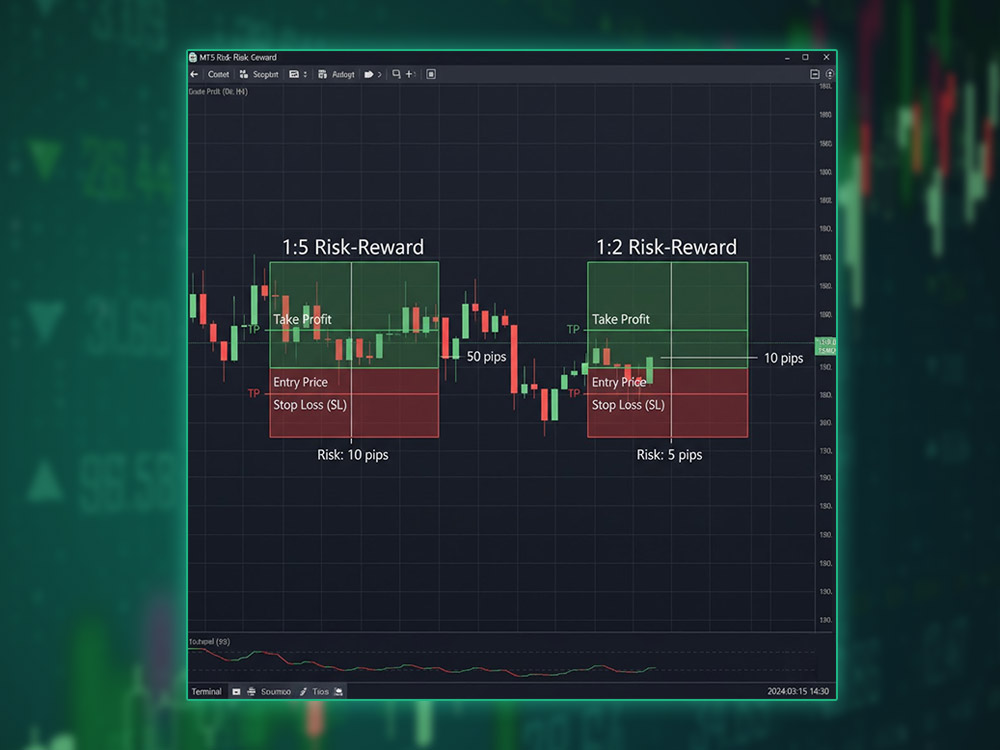
Many traders think higher is always better. They aim for the best risk to reward ratio forex, like 1:5 or 1:6. But that’s not always smart.
Here’s why:
- A tight stop loss gets hit by normal volatility.
- A very wide target often never reaches before a reversal.
So while a 1:5 looks good on paper, it might fail in real trades. A realistic and consistent ratio, like 1:2 or 1:3, is more sustainable over hundreds of trades. If you want to compare margin impacts, see 1:100 leverage vs 1:500.
How to Choose the Right Risk Reward Ratio in Trading
How to Choose the Right Risk Reward Ratio in Trading
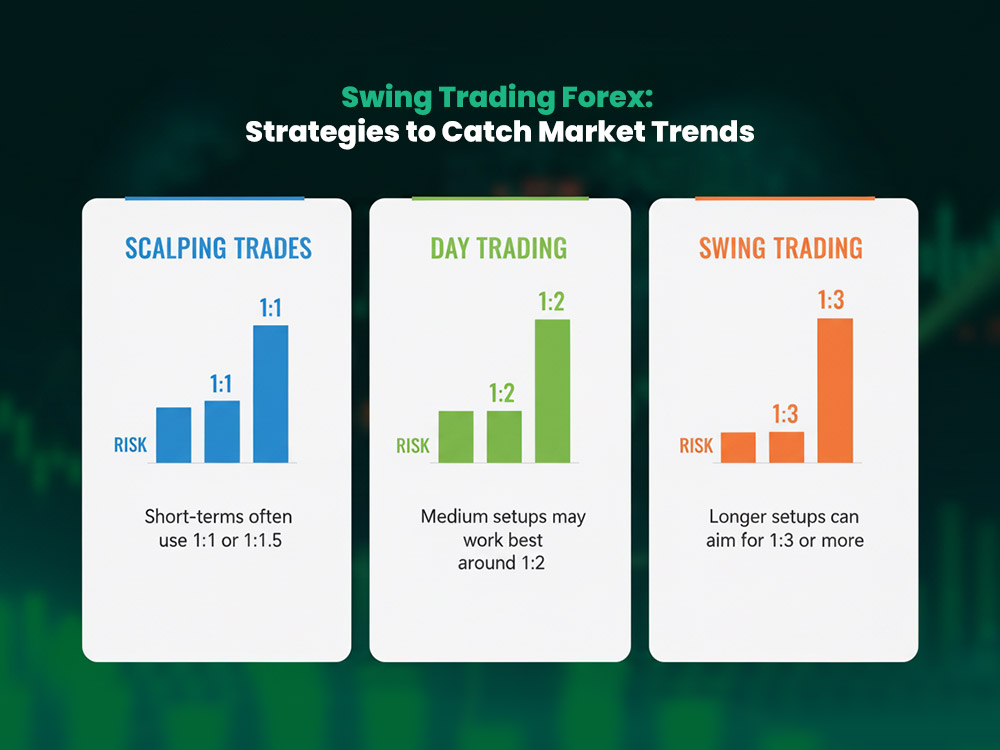
Your ideal ratio depends on your trading style and the market’s rhythm.
Here’s a simple guide:
- Scalping trades – Short-term setups often use 1:1 or 1:1.5.
- Day trading – Medium setups may work best around 1:2.
- Swing trading – Longer setups can aim for 1:3 or more.
Always let the market define your ratio. Don’t force it. The risk to reward ratio in forex only works when it fits your chart structure, time frame, and volatility. If you’re learning about chart patterns, explore indicators for support and resistance.
Your leverage choice also plays a role since it determines how much control you have over trade size and margin. The right leverage can support better balance between risk and reward, see what is the best leverage for forex trading for guidance.
Example: Gold (XAU/USD) Trade
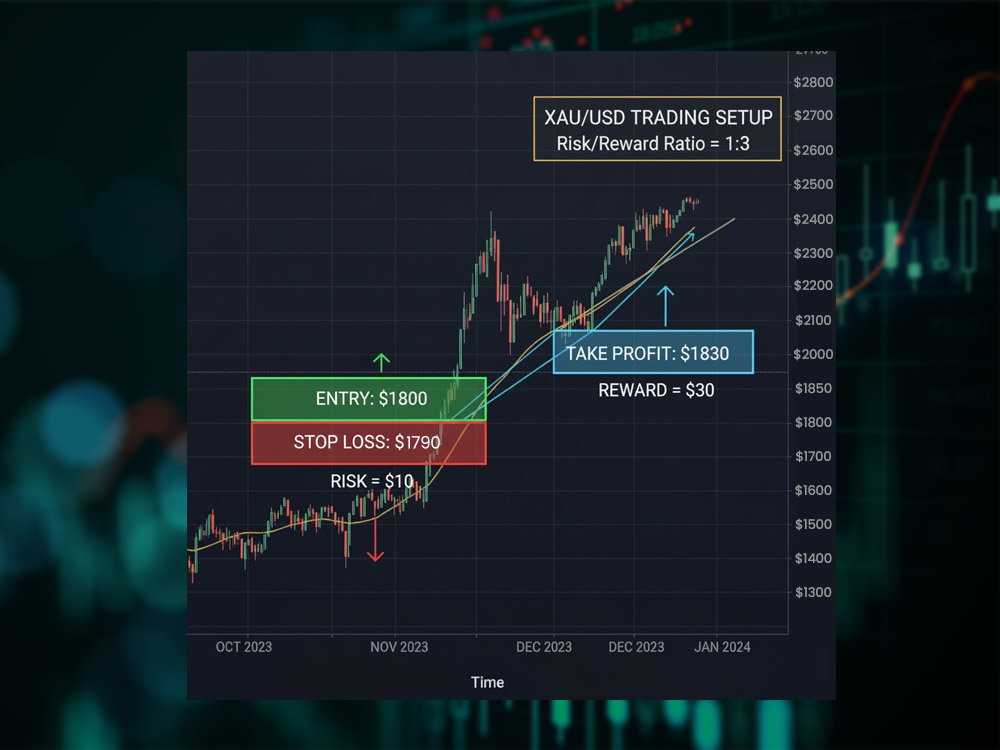
Let’s break it down with a real-world example.
Scenario 1:
Example: Gold (XAU/USD) Trade
Entry: $1800
Stop Loss: $1790
Take Profit: $1830
→ Risk reward ratio = 1:3
Scenario 2:
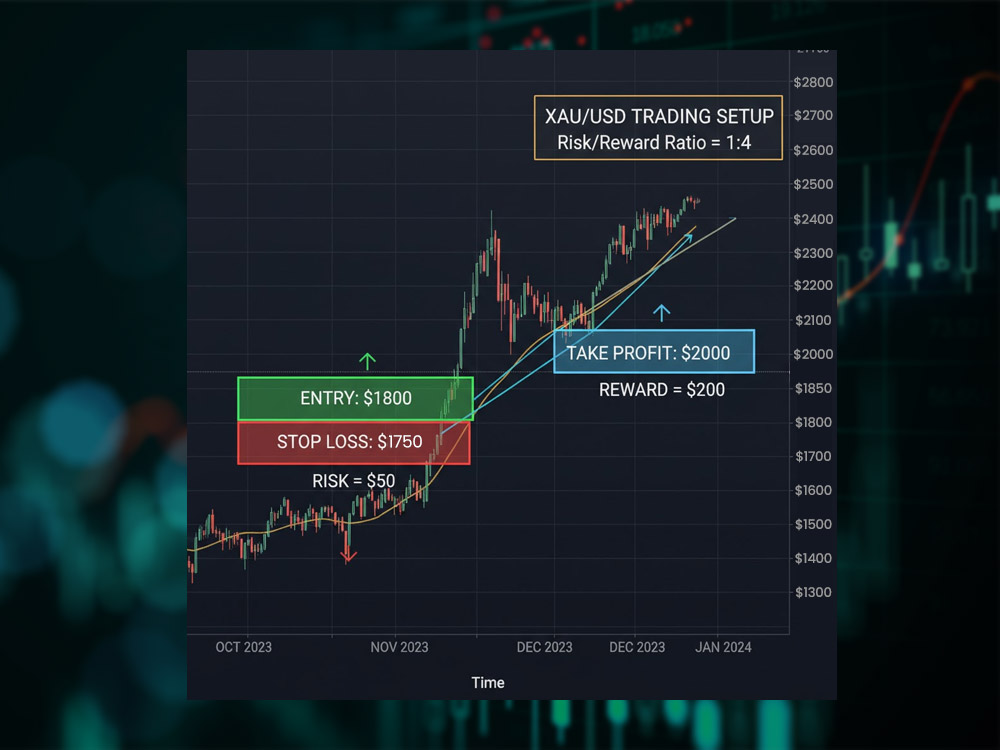
Example: Gold (XAU/USD) Trade
Entry: $1800
Stop Loss: $1750
Take Profit: $2000
→ Risk reward ratio = 1:4
The first setup is more realistic for short-term trading. The second one looks attractive but might take weeks to reach. Smart traders focus on probable targets, not distant dreams - especially when building an XAUUSD trading strategy that balances timing and reward.
Rules for Better Trade Entries Using the Risk to Reward Ratio in Forex
1. Always Set Stop Loss and Take Profit
Never enter without both levels. This locks your risk reward ratio before price moves. Your stop defines the loss limit, and your take profit defines the reward target. Understanding stop losses is key to keeping control of your trades and managing emotions. You can learn more in best stop loss strategy.
2. Keep Risk Per Trade Consistent
Most traders risk 1–2% per trade. If your account is $5,000, keep losses under $100. That’s how professionals maintain control even after a losing streak.
3. Use Market Structure for Stops and Targets
Place stops below strong support or above resistance. Targets should align with key zones where price often reacts. This gives your trading risk reward ratio real logic, not guesswork.
4. Skip Weak Setups
If a trade doesn’t naturally offer a good risk to reward ratio, don’t take it. Good traders win by avoiding bad opportunities.
5. Track Every Trade
Record your ratios, wins, and losses. After 50 trades, patterns emerge. You’ll know if your edge works better with 1:2 or 1:3 setups. You can also backtest setups using MT5 Simulator.
Win Rate vs. Reward: The Balance That Matters
A perfect risk to reward ratio forex setup means little without a solid win rate.
Here’s how the math plays out:
The combination of win rate and risk reward ratio in trading defines profitability. You don’t need both to be high—you need them balanced.
How the Ratio Builds Emotional Discipline
Using the risk to reward ratio in forex is not just math - it’s mindset. When you know your limit and goal before a trade, you stop reacting emotionally. You stop chasing losses. You accept small losses calmly because you know your next big win will cover them. This mindset is what separates professional traders from impulsive ones.
Mistakes to Avoid When Using Risk to Reward Ratio Forex Strategies
- Ignoring Spread and Commission
Always factor in trading costs. They can change your actual ratio, especially for small targets. - Moving Your Stop Loss
If you move your stop after entry, you ruin your ratio. Accept the loss as planned. - Using the Same Ratio for Every Trade
Markets change daily. Adjust your risk to reward ratio for volatility and structure. - Not Testing Your Strategy
Backtest your ratio over at least 100 trades by using a forex simulator. Find what’s statistically profitable for your system.
Advanced Tip: Track Your Expectancy
Your goal isn’t just to have a high risk reward ratio; it’s to have positive expectancy.
Expectancy = (Win% × Average Win) – (Loss% × Average Loss)
Example:
- You win 50% of trades with 1:2 ratio.
- Win side = 0.5 × $200 = $100
- Loss side = 0.5 × $100 = $50
Expectancy = +$50 per trade
That’s how professional traders evaluate the real edge behind their trading risk reward ratio. You can analyze your performance better with how to track trading performance.
When to Use Higher or Lower Ratios
When to Use Higher or Lower Ratios
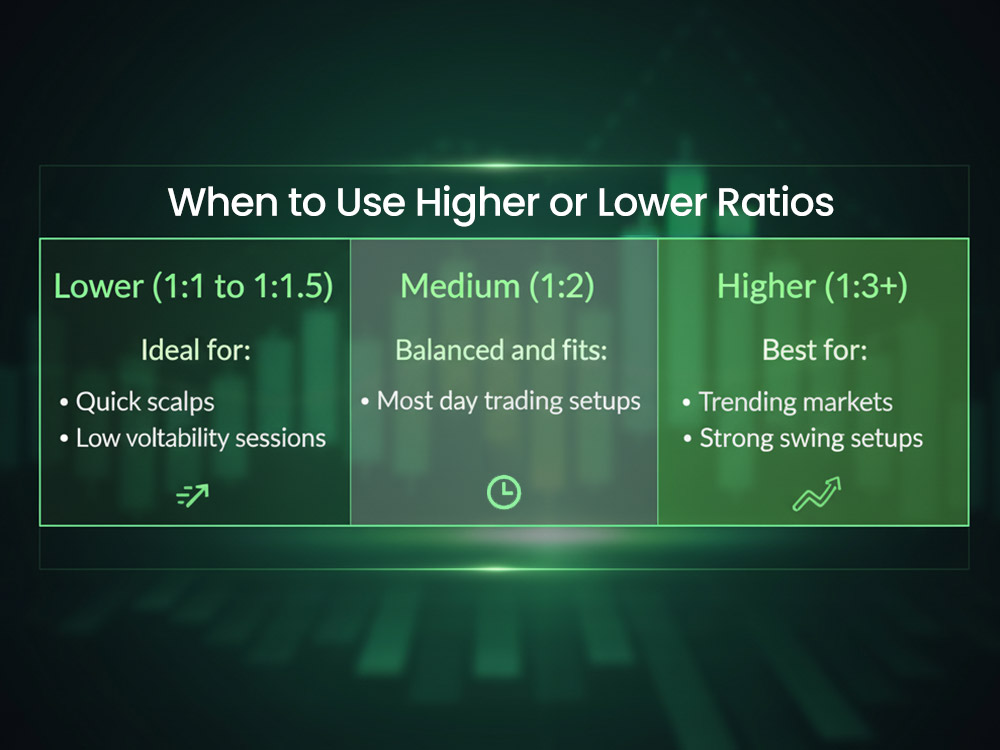
- Lower (1:1 to 1:1.5): Ideal for quick scalps or low volatility sessions.
- Medium (1:2): Balanced and fits most day trading setups.
- Higher (1:3+): Best for trending markets or strong swing setups.
The best risk to reward ratio forex depends on your personality, patience, and system. There’s no universal number - it’s about what you can execute consistently.
If you’re trading with a smaller balance, leverage can make a big difference in how fast your account grows or shrinks. For smaller accounts, read which leverage is best for small account.
Improve Your Risk Reward Ratio in Trading Without Changing Strategy
- Enter Closer to Support or Resistance
Tighter stops, same targets - your ratio improves instantly. - Trail Your Stop as Price Moves
This locks profit and keeps your risk reward ratio favorable even mid-trade. - Take Partial Profits
Close half at 1:1, let the rest run to 1:2 or 1:3. This hybrid method smooths equity curves. - Filter Fewer, Better Setups
Don’t overtrade. The best setups often align with high-probability risk to reward ratio forex opportunities.
Final Thoughts
The risk to reward ratio in forex isn’t just another trading concept - it’s your survival plan.
It gives structure to every trade, guards your capital, and improves your decision-making.
Follow these simple rules to make it second nature:
- Plan your trade before entering.
- Let market structure define your ratio.
- Keep risk per trade small.
- Track results and stay disciplined.
You’ll soon see how this single concept transforms your trading. Because in forex, success doesn’t come from being right all the time- it comes from earning more when you’re right than what you lose when you’re wrong.
That’s the true edge behind mastering the risk to reward ratio in forex. If you’re looking to apply these principles on a platform built for traders who value precision, join Dominion Options. It offers 0.1 spreads, fast execution, and flexible risk management tools that support disciplined trading based on clear risk-to-reward setups.
FAQ: Risk to Reward Ratio in Forex Trading
1. What is a good risk to reward ratio in forex trading?
A ratio between 1:2 and 1:3 is considered strong. It keeps your losses small while letting your profits grow. This balance gives you room to trade confidently without overexposing your account.
2. Can I use the same ratio for every trade?
Not always. Every market condition is different. Volatile pairs may need wider stops, while calmer ones can use tighter setups. Adjust your ratio based on volatility and structure, not habit.
3. Why is the risk reward ratio important?
It’s the simplest way to keep trading in control. A solid ratio lets you stay profitable even if you lose more than you win. One well-planned trade can cover a few small losses, which helps keep your emotions stable and your account growing steadily.
4. How can I improve my risk to reward ratio?
Start with clear stop losses and logical targets. Place trades near strong support or resistance, and avoid guessing where price might turn. Focus on setups that make sense. Over time, tighten your stops naturally by improving entry timing. Tools like moving averages or trendlines can help confirm solid entries.
5. Is 1:1 ratio enough for beginners?
It’s fine when starting out, but growth comes from aiming higher. As you gain more skill, move toward 1:2 or 1:3 setups. Practice steady risk control rather than chasing big wins.