Hedging in Forex: The Risk Strategy That Can Save Your Account
Introduction
Every trader fears a sudden move that wipes out gains. The forex market moves fast. News, politics, and central banks can swing prices in minutes. No one can predict every move. That’s why hedging in forex is so important.
Hedging is like insurance. It doesn’t guarantee profits, but it can stop heavy losses. Done right, it keeps your account safe when the market turns against you. Many traders use brokers like Dominion Options because they support hedging tools and offer raw spreads, which makes managing risk more efficient.
This guide will explain what is hedging in forex, the most effective hedging strategies in forex, and how to use them wisely.
What Is Hedging in Forex?
So, what is hedging in forex? It’s a simple idea with big impact. Hedging means opening trades that protect you from loss.
If one trade moves against you, the hedge trade limits the damage. Think of it as balance. One side goes down, the other side goes up.
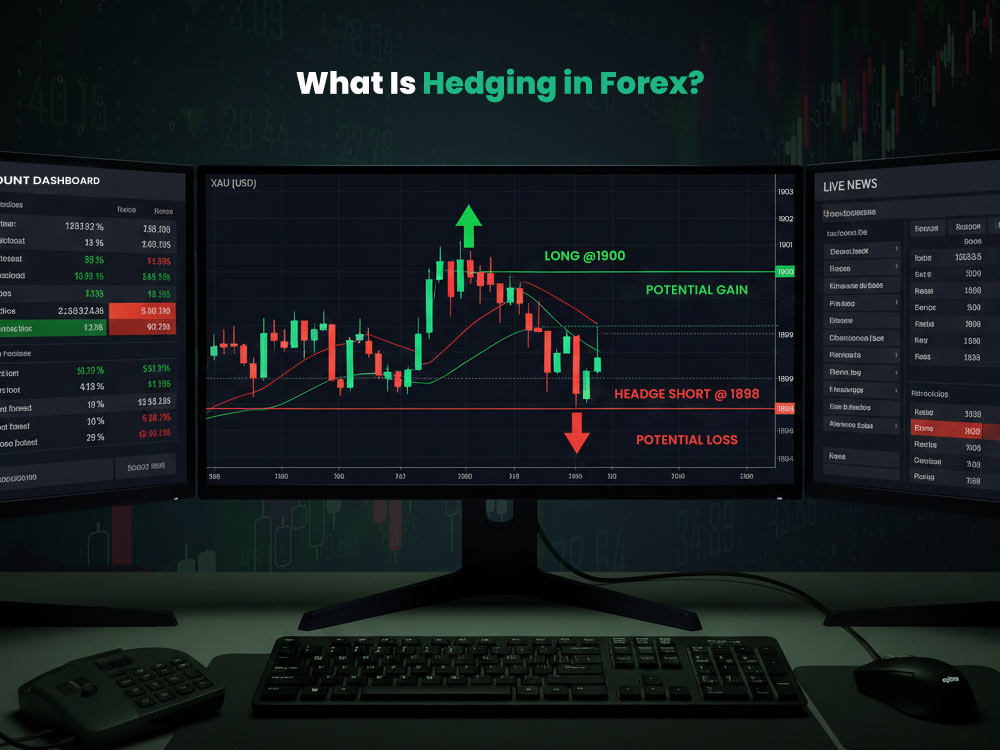
For example, imagine you buy gold (XAU/USD) at 1900 because you expect it to rise. At the same time, you open a small short position on gold at 1898. If gold falls to 1870, your long loses money but your hedge short cushions the hit. If gold climbs to 1930, you close the short for a small loss while keeping most of the gain on your long.
What Is Hedging in Forex
The hedging meaning in forex is not doubling profit. It is lowering risk. If you lose control of risk, your account won’t last long.
Why Traders Use Hedging in Forex
The main reason traders turn to hedging in forex is risk control.
- The forex market is volatile. Currencies can spike or crash without warning.
- Events like interest rate changes or wars cause gaps and sharp moves.
- Even skilled traders take losses when markets act wild.
Hedging gives you a safety net. It helps you:
- Protect capital during high-risk times
- Hold trades longer without panic
- Stay calm while waiting for your setup to play out
Without hedging, one bad day can wipe weeks of gains. With hedging in forex, you still have a chance to fight another day. For a broader safety plan, see risk management in forex.
When to Use Hedging Whie Trading Forex Currency Pairs
You don’t need to hedge every trade. But there are times when hedging strategies in forex make sense:
- Before big news releases like NFP or central bank decisions
- When holding trades overnight or through weekends
- During unexpected political events or crises
- If your trade is profitable but faces short-term risk
For example: You’re long EUR/USD and expect a strong move higher. But the U.S. Fed has a meeting tomorrow. You want to stay in the trade but protect against a sudden USD rally. A hedge can cover that risk. Around news, know when markets are most active with this guide to trading sessions such as forex london session time.
Hedging in Forex vs Stop-Loss Orders
Some traders ask: why hedge if I can use a stop-loss?
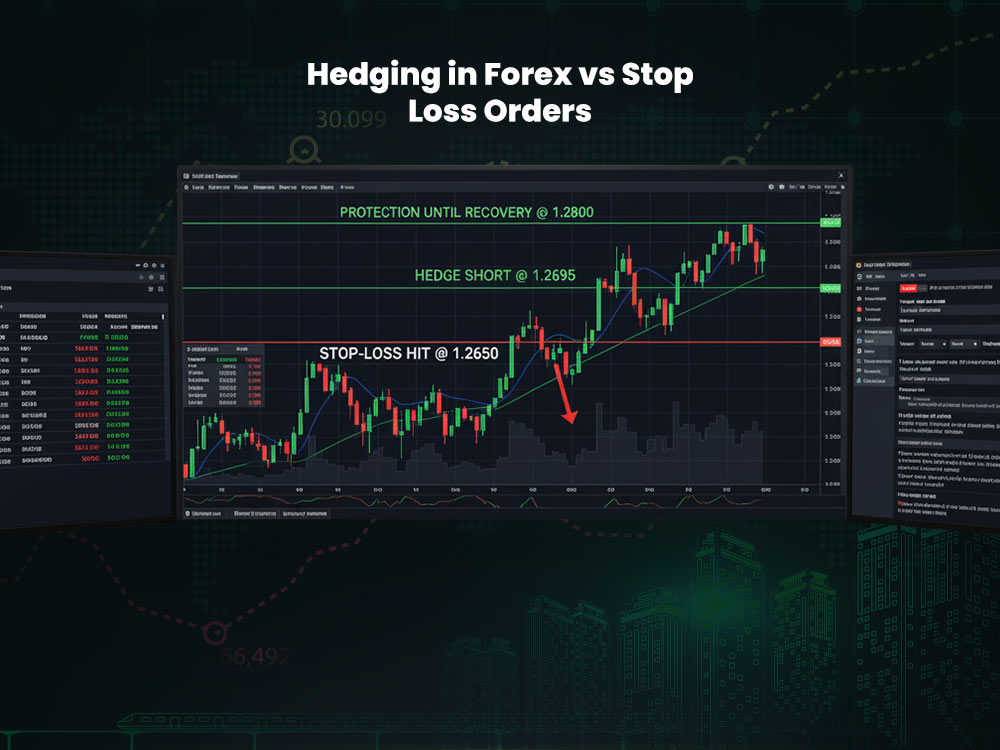
A stop-loss closes your trade at a set level. Once hit, you’re out. If the price quickly reverses, you miss the bounce. For example, imagine you go long GBP/USD at 1.2700 with a stop at 1.2650. If price dips to 1.2645 and then climbs back to 1.2800, your stop-loss takes you out and you miss the rally.
Hedging in Forex vs Stop-Loss Orders
Hedging in forex keeps you in the market. While one trade loses, the hedge offsets it. If the market recovers, you can close the hedge and keep your main trade. Using the same example, you might hedge by opening a short at 1.2695. If the pair falls to 1.2650, the short cushions the loss. If it rises to 1.2800, you close the hedge with a small loss and still benefit from the rally on your long.
Stop-loss is simple and cheap. Hedging is more flexible but costs more. Many traders use both depending on the situation. If you need a refresher, read these stop-loss strategies in trading.
Common Hedging Strategies in Forex
There are many ways to hedge in forex. Some are simple. Some need advanced tools. Let’s look at the main hedging strategies in forex.
1. Direct Hedging
This is the most basic strategy. You open a buy and a sell on the same pair at the same time.
Example: You’re long 1 lot EUR/USD. You open a short 1 lot EUR/USD.
Result: Your net exposure is zero. If the euro drops, your short gains what your long loses.
This locks your account. You won’t lose, but you won’t win either. It’s best for short periods like news events. Holding both sides too long just burns money on spreads and swaps.
2. Correlation Hedging

ECorrelation Hedging
Another hedging strategy in forex uses correlated pairs.
Currencies often move together. Some pairs rise and fall in sync. Others move in opposite directions.
Example: EUR/USD and GBP/USD usually move the same way. If you’re long EUR/USD, you might short GBP/USD to cut risk.
If both fall, the short offsets your euro loss. If both rise, the long offsets your pound loss. You may not cancel risk 100%, but you reduce it.
Correlation hedging works well if you understand which pairs are linked. But correlations change. Always check before you hedge.
3. Options Hedging
Options Hedging
Options are powerful tools for hedging in forex. They give you the right, not the obligation, to buy or sell at a set price.
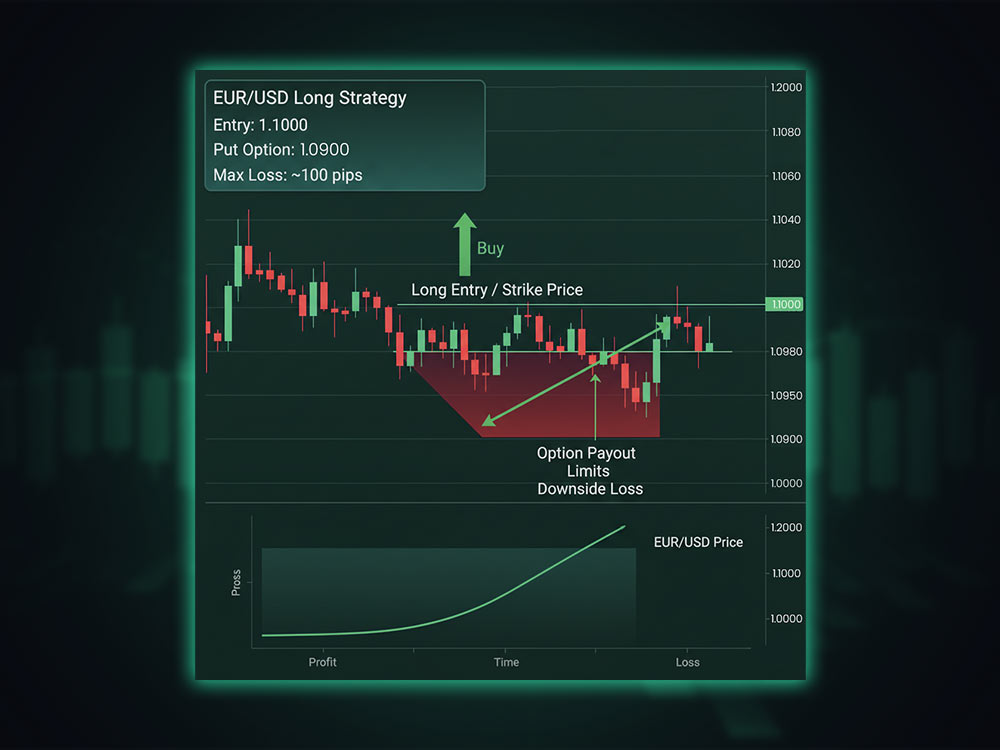
Example: You buy EUR/USD at 1.1000. You also buy a put option with a strike at 1.0900. If price falls below 1.0900, your option pays out.
This cuts your downside. If EUR/USD rises, you let the option expire and enjoy the profit.
The cost is the option premium. Think of it like an insurance fee.
4. Forward Contracts
Another way to hedge is using forwards. A forward contract locks today’s price for a future trade.
The hedging meaning in forex here is stability. You know the rate you’ll get no matter what happens.
Businesses often use forwards to protect future cash flows. For traders, forwards reduce uncertainty but remove flexibility. You must settle at the agreed price even if the market moves in your favor.
5. Basket Hedging
Instead of hedging one trade, you hedge a group. This is also known as portfolio hedging in forex.
Example: You’re long EUR/USD, GBP/USD, and AUD/USD. That’s heavy dollar exposure. To hedge, you short USD/CHF or USD/JPY.
This way, you protect the dollar side of your portfolio rather than each trade. It’s efficient but requires good tracking of exposure.
6. Cross-Asset Hedging
Some hedging strategies in forex use other markets.
- Gold often moves opposite to the U.S. dollar.
- Oil prices can affect CAD pairs.
- Bond yields can influence JPY strength.
If you know these links, you can use them for hedging. For example, if you’re long USD/JPY but fear yen strength, you might buy Japanese bonds or short Nikkei futures.
This method is advanced and not common for small traders.
Advanced Hedging in Forex
Professional traders use advanced hedging strategies in forex.
- Delta hedging: Adjusting option positions so small price moves don’t affect the portfolio. It needs constant rebalancing. For example, if you hold a EUR/USD call option and the pair rises, you might sell a small amount of EUR/USD to keep overall exposure balanced.
- Volatility hedging: Using options like straddles or strangles to profit from big moves in either direction. For instance, a trader expecting sharp swings in gold could buy both a call and a put option. Whichever way gold breaks, one option covers the loss on the other.
These methods show the deeper hedging meaning in forex, but they require strong math skills and big accounts.
Example: Hedging with Numbers
Let’s see how a hedge works in practice.
You buy 1 lot EUR/USD at 1.1000. Each pip is $10.
- If price rises to 1.1300, you gain 300 pips = $3,000.
- If price falls to 1.0700, you lose 300 pips = $3,000.
Now, you hedge with a put option at 1.0900 costing $200.
- If EUR/USD rises to 1.1300, you make $3,000 minus $200 = $2,800.
- EUR/USD drops to 1.0700, your trade loses $3,000 but the option pays $1,000. Net loss is $2,000, not $3,000.
This is a clear example of hedging in forex cutting your losses while letting you keep most gains.
Image suggestion: EUR/USD chart with long entry at 1.1000 and put option strike at 1.0900, arrows marking reduced loss versus full loss.
For more on the metal itself, check our blog about forex trading strategies for gold.
The Costs of Hedging in Forex
Every hedge has a cost. You pay in different ways:
- Spread: The difference between buy and sell prices eats into gains.
- Swap: Holding positions overnight can cost interest.
- Premium: Options and forwards require upfront payment.
- Lost profits: The hedge can limit your upside.
Before using any hedging strategies in forex, weigh the cost against the protection you get. Learn how fees move with this primer on forex spreads and why news can cause slippage in forex.
Common Mistakes in Hedging
Hedging works only if used smartly. Many traders misuse it.
- Overhedging: Taking too many hedge trades cancels profits.
- Holding too long: Hedges are short-term tools. Holding drains capital.
- Ignoring costs: Spreads, swaps, and premiums can add up.
- Wrong hedge choice: Using the wrong pair or wrong size means weak protection.
Learning the real hedging meaning in forex means knowing that less is more. If you’re in a hole, here are is an expert guide on trading loss recovery strategies.
Hedging in Forex vs Diversification
Diversification spreads risk across assets. Hedging covers risk directly.
Diversification: You trade different pairs or markets so one loss won’t sink you. For example, you might hold EUR/USD and USD/JPY so if the euro weakens, gains on the yen trade can soften the impact.
Hedging: You open positions that cancel out part of the risk. For instance, if you’re long AUD/USD, you could short NZD/USD to balance exposure since both pairs often move together.
Both reduce exposure, but in different ways. Many smart traders use both. To pick instruments for correlation or baskets, scan our guide to best currency pairs to trade.
Is Hedging Legal?
Yes, hedging in forex is legal. But some brokers or regions restrict it.
For example, U.S. brokers follow FIFO rules. You can’t hold buy and sell on the same pair at once. Outside the U.S., many brokers allow direct hedging.
Always check your broker’s rules before trying.
Should You Use Hedging in Forex?
Hedging is not for everyone. It adds complexity and cost.
You may not need it if:
- You trade short-term with strict stop-losses
- You prefer simple strategies
- You have a small account where costs hurt more
If you do use it, match hedge size with your buying power. Start here: forex leverage explained and best leverage for small trading account.
It can help if:
- You hold trades long term
- You trade through major events
- You want to limit large drawdowns
The best way is to test hedging in a demo account. Learn how it feels before risking real money.
Tips for Using Hedging in Forex Trading
- Keep hedge size equal or smaller than your main trade
- Set clear rules for when to close the hedge
- Track costs before and after each hedge
- Don’t hedge every trade—use it only when risk is high
- Stay calm and don’t let fear push you into hedging too often
The Psychology of Hedging While Trading Forex

The Psychology of Hedging While Trading Forex
Hedging can mess with your mind. You see one trade win while the other loses. Some traders feel stuck or frustrated.
Remember: the true hedging meaning in forex is survival. Accept smaller gains and smaller losses. Your goal is to stay alive in the market, not to win every battle.
Final Thoughts
Hedging in forex is not magic. It won’t make you rich overnight. But it can save your account from disaster.
Think of it as insurance. You pay a cost, but you protect yourself from big hits.
The key is to use hedging strategies in forex wisely. Choose the right method for the right time. Watch costs. Avoid mistakes like overhedging or holding too long.
If you do it right, hedging can be the difference between blowing up and staying in the game. Choosing a best broker for forex trading like Dominion Options, with raw spreads and fast payouts, makes hedging more effective and practical for active traders.
FAQ on Hedging in Forex
1. What is hedging in forex?
It’s opening another trade to reduce risk from your main position. A hedge offsets potential losses and gives you a chance to stay in the market when price swings hard.
2. What is the meaning of hedging in forex?
It means protecting your account from big losses, not making extra profit. Hedging works like insurance, so you pay a cost but avoid heavy damage.
3. What are common hedging strategies in forex?
Direct hedging, correlation hedging, options, forwards, and basket hedging. Each approach reduces risk in a different way and is useful in certain situations.
4. Is hedging in forex legal?
Yes, but some brokers and regions restrict it. Always check broker rules since in some countries opposite trades may be closed automatically.
5. When should I use hedging in forex?
During high volatility, before major news, or when holding trades overnight. It’s also useful if you want to lock in gains while waiting for a clearer trend.