
How Can Leverage Impact Your Trading: How to Win Consistently in 2026
Many traders ask one question: how can leverage impact your trading? The answer is simple. It can make you or break you.
Leverage can turn small accounts into something much larger. It also carries the power to wipe those accounts in a flash. A short winning streak feels great, but one bad trade with high leverage can undo months of gains.
The way you use leverage decides your future as a trader. Handle it with respect and discipline, and it becomes a tool for steady growth. Use it carelessly, and it becomes the fastest path to losses.
For traders who want strong conditions, joining Dominion Options can help. They offer tight spreads, up to 500:1 leverage, and low latency execution that keeps your trades fast and clean.
This guide explains the impact of leverage on trading, shows how to avoid the traps that catch most beginners, and helps you build a plan that puts you on the side of consistent winners.
What Is Leverage and How Does it Impact on Trading?
What Is Leverage and How Does it Impact on Trading?
To understand how can leverage impact your trading, start with the basics.
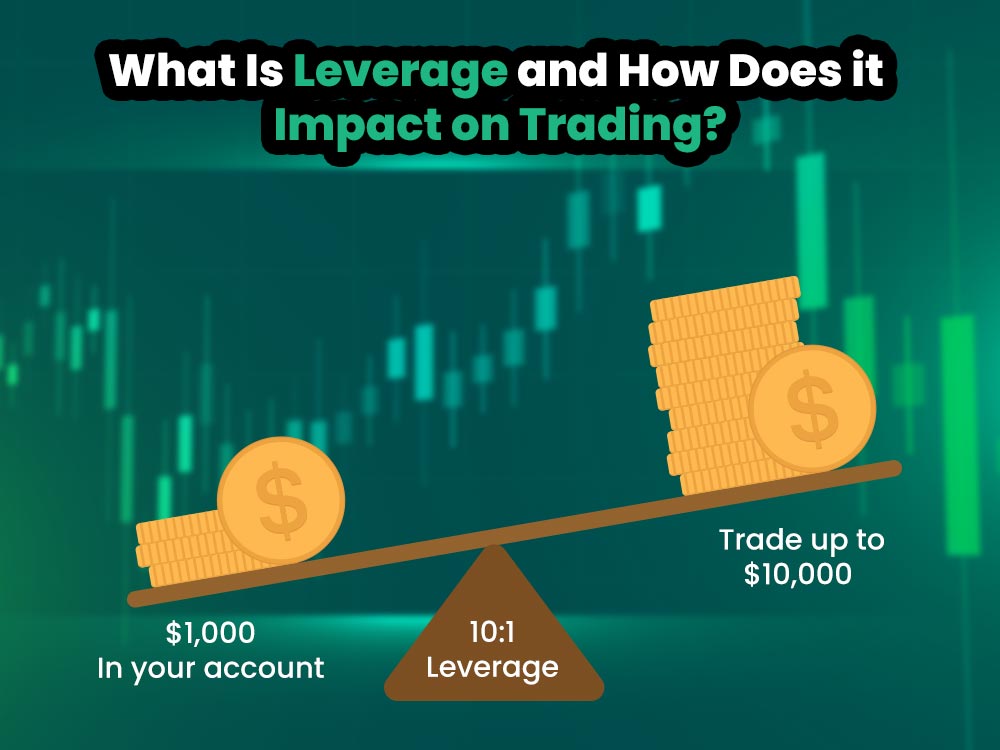
Leverage lets you control more money than you deposit. Brokers lend you the extra, which means you can trade positions larger than your account balance. The deposit you put down is margin, a good-faith amount set aside to keep the trade open. If your balance falls too far, the broker may close your position. This is why margin acts as both access and protection. The size you choose matters, and choosing forex leverage carefully can be the difference between steady growth and quick losses.
Example trade:
- With $1,000 and no leverage, you open $1,000 in trades.
- With 10:1 leverage, that $1,000 opens $10,000 in trades.
- With 50:1 leverage, $1,000 controls $50,000.
The impact of leverage on trading is clear: profits and losses both grow faster. Even a small move in price can feel huge when leverage is applied. That can be exciting when you win, but painful when you lose. This is why new traders often struggle to control risk. Knowing this is the first step to handling leverage with care. For a deeper dive, see our other article about forex trading leverage explained.
A Simple Example of How Leverage Impacts Your Trading
A Simple Example of How Leverage Impacts Your Trading
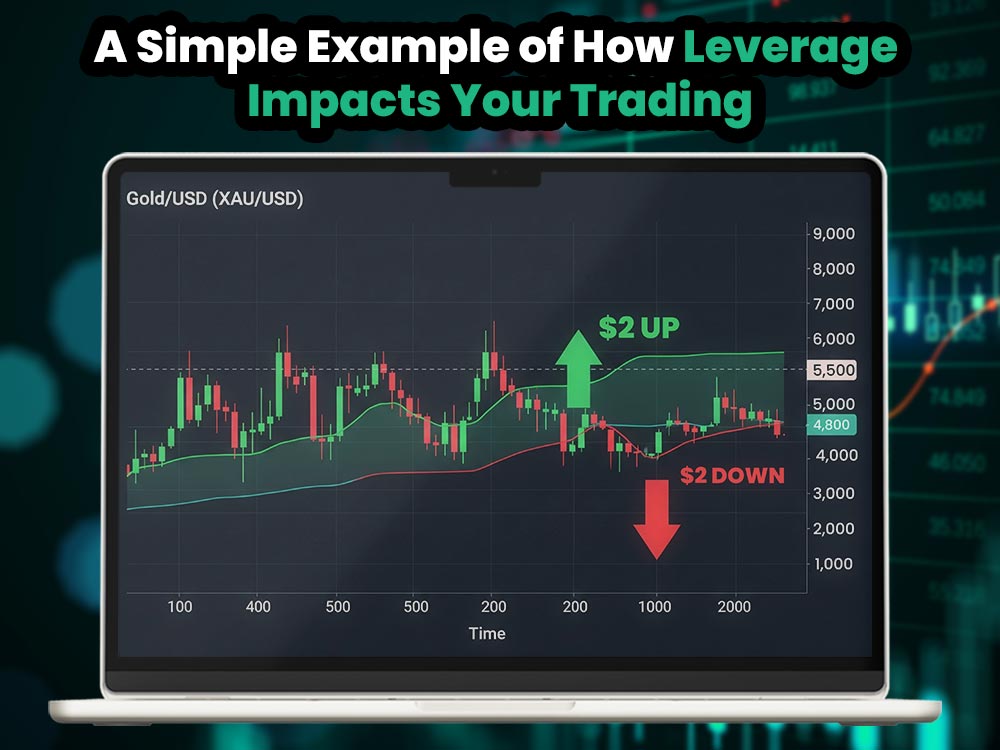
Say you buy one lot of Gold/USD worth $100,000.
- Without leverage, you need the full $100,000. A 20-pip move earns $200. That’s a 0.2% return.
- With 10:1 leverage, margin drops to $10,000. That same $200 is a 2% return.
- With 50:1 leverage, margin falls to $2,000. The $200 is now a 10% return.
That’s the double edge. The same math applies to losses. Even a $2 move against you in Gold/USD with high leverage can wipe a big part of your margin. This is where the impact of leverage on trading can hurt most. For practical tips, check our guide on effective strategies for spot gold trading.
Why Traders Lose With High Leverage
Why Traders Lose With High Leverage
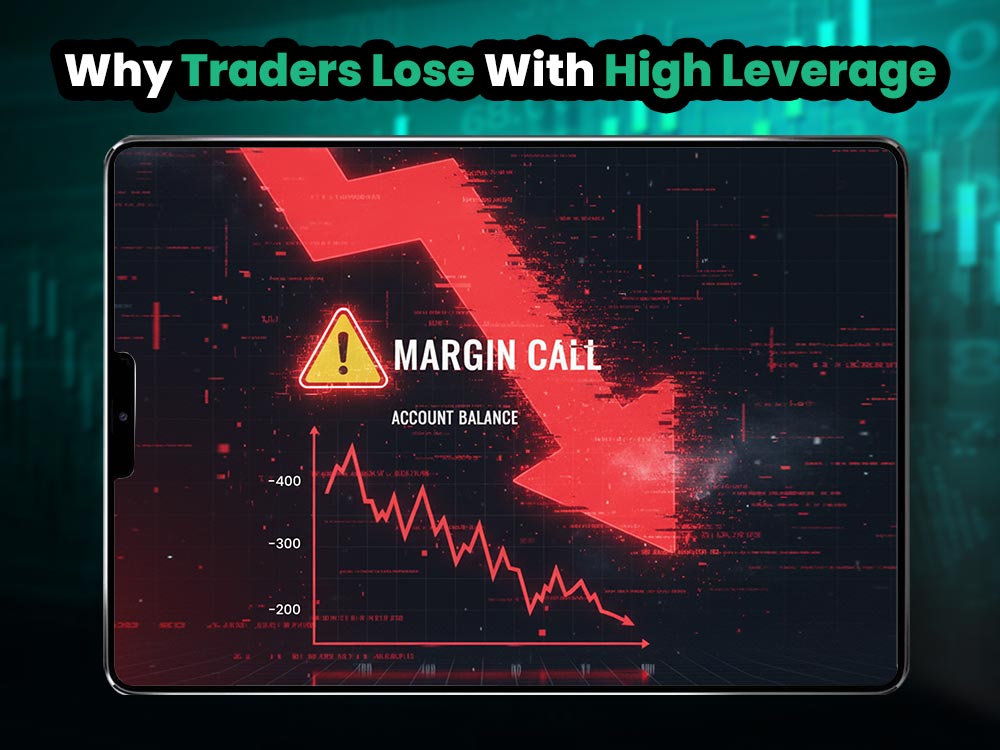
Traders often misuse leverage. They focus on big wins and forget big risks. Here’s how leverage can impact your trading in harmful ways.
1. Magnified Losses
A 1% market move can drain 10% of your account with high exposure.
2. Margin Calls
When losses eat into margin, brokers close trades fast. That’s the most painful impact of leverage on trading.
3. Trading Costs Hit Harder
Spreads, commissions, and fees eat a bigger share when you use extreme leverage.
4. False Confidence
New traders think high leverage means skill. One wrong trade proves the opposite.
In the end, the biggest danger is not knowing how fast leverage can move against you. A single oversized trade can erase weeks of progress. Many traders learn this too late. Respecting risk is the only way to make leverage work for you. For more on this topic, see our article about high leverage trading risks.
What the Odds Look Like
The math behind how can leverage impact your trading is simple.
If costs (spread and fees) are more than 10–20 times smaller than your margin, you’re safe. But if costs eat a large part of your margin, odds shift against you.
Example trade:
- If your margin is $50 and fees are $5, you’re in danger.
- If your margin is $200 and fees are $1, you’re fine.
The impact of leverage on trading isn’t just market moves. Costs can tip the scale too.
The Role of Regulation
Rules exist because the impact of leverage on trading can be extreme.
In the U.S., regulators set limits:
- 50:1 for major forex pairs.
- 20:1 for minor pairs.
These caps reduce risk. Offshore brokers may offer 500:1 or higher. That may sound tempting, but the hidden impact of leverage on trading at those levels is account wipeout. If you are just starting out, it helps to learn forex trading step by step so you understand how these limits affect your choices.
Why Leverage Is Still Useful
If you ask, how can leverage impact your trading if used well? The answer: it makes you efficient.
- You can trade without tying up all your money.
- You can spread capital across trades.
- You can short markets, not just buy.
- You can profit from small forex moves.
The key is control. Use leverage as a tool, not a shortcut. For new traders, the safest path is to start with lower ratios. Keeping positions small makes mistakes easier to recover from. As skills grow, you can raise your exposure. Finding the best leverage for beginners often comes down to balancing learning with protecting capital.
How to Use Leverage the Right Way
Why Traders Lose With High Leverage
Winning traders focus on managing risk. That’s the real answer to how can leverage impact your trading.
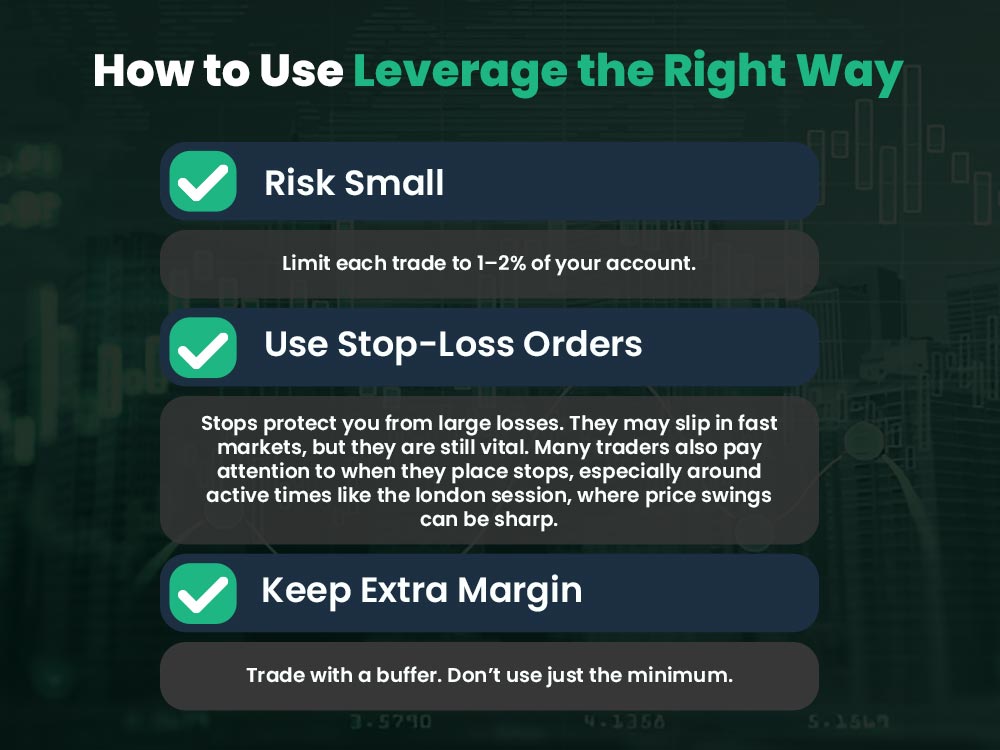
1. Risk Small
Limit each trade to 1–2% of your account.
2. Use Stop-Loss Orders
Stops protect you from large losses. They may slip in fast markets, but they are still vital. Many traders also pay attention to when they place stops, especially around active times like the london session, where price swings can be sharp.
3. Keep Extra Margin
Trade with a buffer. Don’t use just the minimum.
4. Watch Fees
Costs matter. Pick high leverage brokers with low spreads and funding charges.
5. Start Low
Begin with 5:1 or 10:1 leverage. Grow with skill, not greed.
6. Match Leverage to Market
Volatile markets demand less leverage. Stable ones may allow more.
Each of these steps reduces the harmful impact of leverage on trading.
Common Mistakes to Avoid
Here’s how leverage can impact your trading if you ignore rules:
- Overtrading: Too many positions drain margin.
- Poor risk-reward: Chasing tiny wins with high risk is a trap.
- No plan: Trading without rules means leverage will expose your weak spots.
Build a Consistent Trading Plan
A plan is your shield. It defines how you use leverage. Without it, you fall to emotion.
Must-Haves in Your Plan
- Entry signals.
- Exit rules.
- Position size rules.
- Max leverage settings.
- Review schedule.
This is where the true answer to how can leverage impact your trading shows. With a plan, leverage helps. Without one, it destroys. A clear plan also gives you a way to measure each trade against your goals. It helps you size positions, manage stops, and keep risk within limits. When you know how much margin you use and why, you avoid mistakes. Understanding this process is the same as doing a proper forex leverage calculation before every trade.
Psychology and Leverage
The impact of leverage on trading is not just math. It’s mental.
Small account moves feel huge under high leverage. That triggers panic or greed. The fix is simple:
- Risk less so you feel calm.
- Focus on process, not one trade.
- Review results weekly.
A steady mind beats the stress of high leverage. Strong discipline makes you consistent, and knowing how different ratios affect your mindset matters. Comparing options like 1:100 Leverage vs 1:500 helps traders see how pressure changes with size and why balance is key, and for a deeper understanding you can check our blog where we break down these differences in detail.
The Path to Winning Consistently
Consistency is the final goal. The answer to how can leverage impact your trading is: it decides how long you last.
Here’s the roadmap:
- Learn how leverage works.
- Start small.
- Track trades in a journal.
- Refine risk tools.
- Use forex indicators wisely.
- Scale up slowly.
- Stay disciplined.
Follow this, and the impact of leverage on trading will turn into a steady advantage.
Final Thoughts
So, how can leverage impact your trading? It makes small moves huge. It gives opportunity but also brings risk.
Think of leverage like fire. It cooks your meal when controlled. It burns your house when reckless.
To win consistently, respect leverage. Risk small, plan trades, and guard capital. That’s how you turn the impact of leverage on trading into lasting success.
To start trading today, join Dominion Options. You’ll get access to tight spreads starting from 0.0 pips, up to 1:500 leverage, fast execution speeds, and support for all trading styles, including scalping and hedging. Their setup makes it easier for beginners to get started and grow into more advanced strategies.