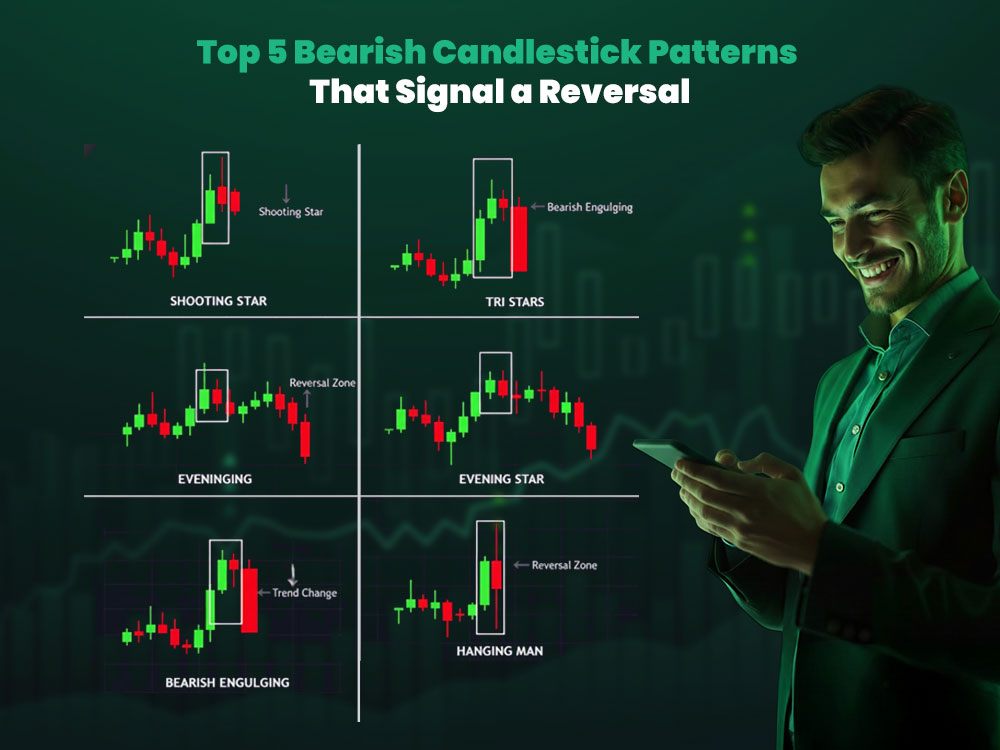
Top 5 Bearish Candlestick Patterns That Signal a Reversal
Recognizing bearish candlestick patterns is one of the most reliable ways to spot when a market is about to reverse. These patterns reveal a critical shift in sentiment, from strong buying to growing selling pressure.
Each bearish candle tells a story of buyers losing strength and sellers stepping in with force. When traders can read these clues, they gain an early edge before major trend changes.
In this guide, we’ll break down the top 5 bearish candlestick patterns that consistently signal reversals. You’ll learn how each pattern forms, what it means, and how to use it on your charts with confidence.
Whether you trade forex, stocks, or crypto, these setups work across all markets and timeframes. For traders looking to apply them in a professional environment, Dominion Options offers fast execution, tight spreads, and multiple platforms like MetaTrader 5 which is perfect for applying these bearish reversal patterns with precision.
1. Bearish Engulfing Pattern
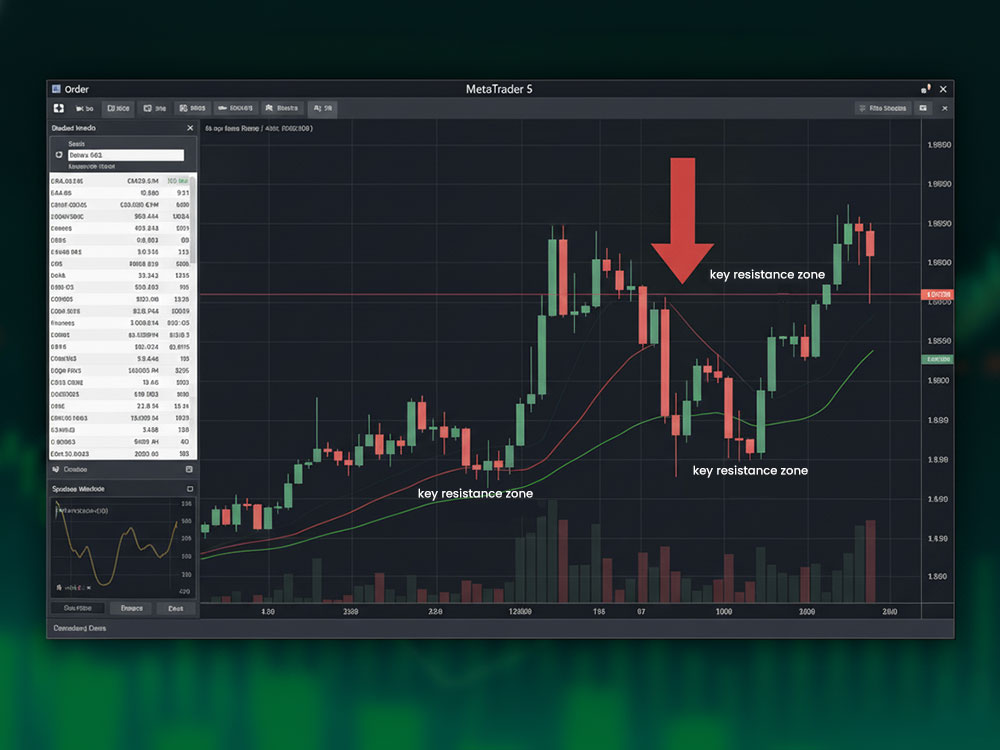
Bearish Engulfing Pattern
The bearish engulfing setup is among the most popular bearish candlestick patterns for spotting a market top. It’s clear, decisive, and shows when sellers have fully taken control.
How it forms
- The first candle is bullish — buyers still dominate.
- The second is a strong bearish candle that opens higher but closes below the first candle’s low.
- The second candle completely “engulfs” the prior body.
This price action signals that sellers have overwhelmed buyers and may drive prices lower.
What it means
A bearish reversal candlestick like this marks a clear power shift. It’s especially effective when it forms at a resistance level or after a prolonged uptrend. Check our article about the bearish engulfing candlestick pattern to learn how to trade it in detail.
Example scenario
Imagine EUR/USD rallies for several days. Then, a large red bearish candle forms that swallows the previous bullish candle entirely. Volume spikes. This pattern warns that buyers are exhausted - and sellers are ready to move in.
Traders often enter short after the close and set stops above the engulfing candle’s high.
Trading checklist
- Confirm near resistance or supply zones.
- Check that the close breaks below the previous candle’s low.
- Trade on higher timeframes like 4H or Daily for reliability.
Psychology
This bearish pattern reflects trapped buyers. The uptrend continues until sellers overpower them. The result is a sudden shift in momentum that can start a new downtrend.
2. Shooting Star
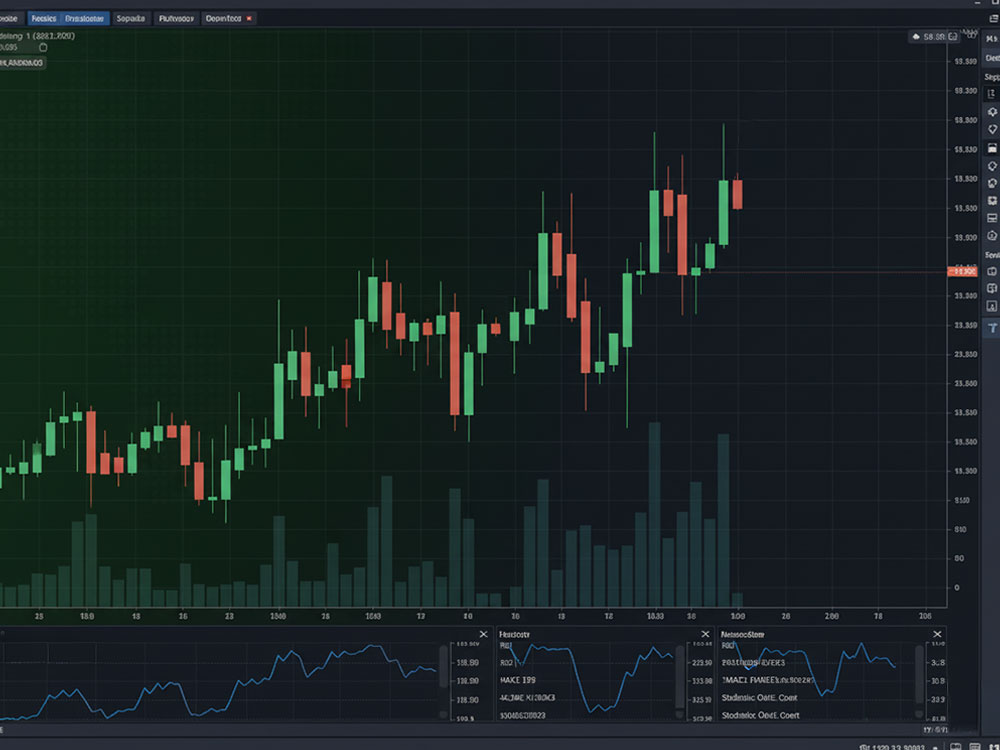
Shooting Star
The shooting star is another powerful signal in the family of bearish candlestick patterns. It’s a single-candle warning that appears near the end of an uptrend.
How it looks
- Small body near the candle’s lower end.
- Long upper wick (at least twice the body).
- Very small or no lower wick.
Meaning
The long upper shadow shows that buyers tried to push prices higher but failed. Sellers quickly reversed the move, forcing the candle to close near its open.
This bearish pattern chart setup shows rejection of higher prices - a strong visual cue that the uptrend might be fading.
Example scenario
After a week of gains, GBP/USD forms a shooting star candlestick with a long upper wick near resistance. The next candle opens lower and turns bearish. That confirms sellers are active.
Traders see this as an entry opportunity to short with stops above the candle’s high.
Trading checklist
- Use the next candle for confirmation.
- Combine with RSI divergence or trendline rejection.
- Works best near key resistance levels or supply zones.
Psychology
The shooting star pattern shows buyers losing control in real time. The long upper wick tells you sellers tested the market’s limits — and won. The candle’s body is small because the fight ended near the open, hinting that bulls have run out of fuel.
3. Evening Star

Evening Star
Among the classic bearish reversal patterns, the evening star is one of the most reliable. It’s a three-candle formation that signals the end of bullish momentum and the start of a potential downtrend.
Structure
- First candle: Strong bullish move - buyers dominate.
- Second candle: Small body (often a doji), showing indecision.
- Third candle: Large bearish candle closing well into the first candle’s body.
Interpretation
This formation clearly illustrates how buying pressure fades over time. The indecision in the second candle, followed by a deep bearish close, confirms a bearish reversal candlestick setup.
Example scenario
A stock rallies strongly for a week. Then, a big green candle forms, followed by a small indecision candle, and finally, a large red candle that wipes out most of the previous gains.
This sequence completes the evening star candlestick pattern, signaling a new downtrend.
Trading checklist
- Look for it at resistance or supply zones.
- Confirm with the third candle’s strong close.
- Combine with RSI divergence for added confidence.
Psychology
The evening star maps the full emotional cycle such as excitement, hesitation, and then panic. Early buyers get trapped at the top while sellers take over. This makes it one of the strongest bearish reversal patterns on any timeframe.
4. Dark Cloud Cover
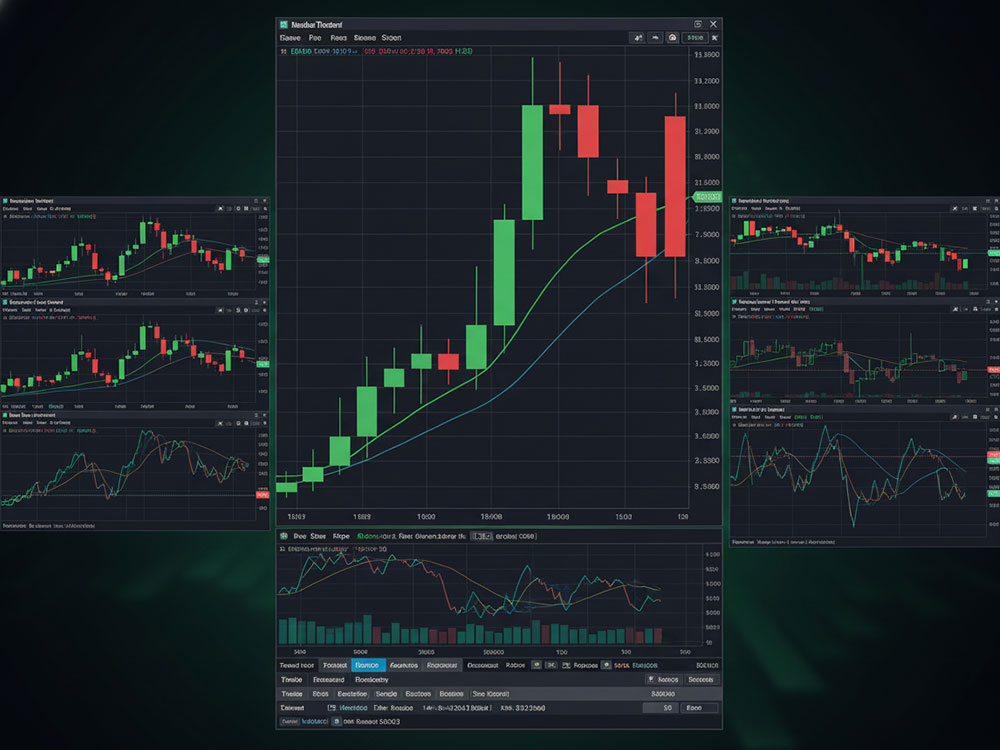
Dark Cloud Cover
The dark cloud cover pattern often appears when an uptrend loses steam. It’s a two-candle bearish pattern that represents an aggressive rejection of higher prices.
How it forms
- The first candle is large and bullish.
- The next candle opens above the prior high (a small gap up) but closes below the midpoint of the first candle’s body.
What it means
The failed gap shows that buyers started strong but couldn’t maintain control. Sellers took over and forced a deep close.
When the second candle penetrates more than halfway into the first, it confirms the bearish reversal pattern.
Example scenario
USD/JPY has been climbing steadily. A large bullish candle forms one day, followed by a strong red candle closing deep below its midpoint. That’s your dark cloud cover which is a bearish warning.
Trading checklist
- Wait for the next candle to confirm the down move.
- Trade at key resistance levels for better accuracy.
- Volume spikes add reliability to the signal.
Psychology
The pattern shows optimism turning into disappointment. Traders who bought during the initial gap realize they’re trapped as price reverses. This collective exit fuels further downside momentum.
5. Hanging Man

Hanging Man
The hanging man looks like a hammer but appears at the top of an uptrend. It’s one of the simplest yet most overlooked bearish candlestick patterns.
How to recognize it
- Small body near the candle’s upper range.
- Long lower wick — at least twice the body length.
- Little or no upper shadow.
What it suggests
Even though the session closed near its open, the long lower wick shows that sellers pushed prices down sharply before buyers recovered.
That selloff reveals weakness inside the bullish move.
Example scenario
Gold climbs steadily for several sessions. Then a hanging man candlestick pattern appears on the daily chart, followed by a red bearish candle the next day. The combination signals potential reversal and prompts short entries.
Trading checklist
- Always wait for confirmation from the next candle.
- Works best near resistance or trendline tops.
- Combine with overbought RSI for stronger confluence.
Psychology
This bearish pattern reveals a hidden shift. Sellers tested the market’s strength and nearly broke it. Buyers managed a weak recovery, but that test shows cracks forming beneath the surface.
How to Confirm Bearish Reversals
Bearish candlestick patterns become more reliable when confirmed by technical context. Always combine them with broader signals.
1. Check the trend
They matter most after a clear uptrend. Without a prior rise, a bearish pattern chart might only indicate short-term consolidation.
2. Identify resistance zones
Patterns forming near resistance or supply areas have higher accuracy. For instance, a bearish engulfing at a weekly resistance zone often marks a top.
3. Volume confirmation
Stronger volume during the bearish candle shows real selling pressure — a crucial confirmation.
4. Combine indicators
Use RSI or MACD for divergence clues. If RSI shows overbought levels when a bearish reversal candlestick forms, the probability of reversal increases. To know more about trading indicators please read this article.
5. Wait for the close
Always let the candle close before acting. Many signals fail mid-session but confirm at the close. You can also check our article about the bearish harami pattern to see how this setup forms after a strong move up and signals a slowdown before sellers take over.
Example: Combining Bearish Patterns in Action
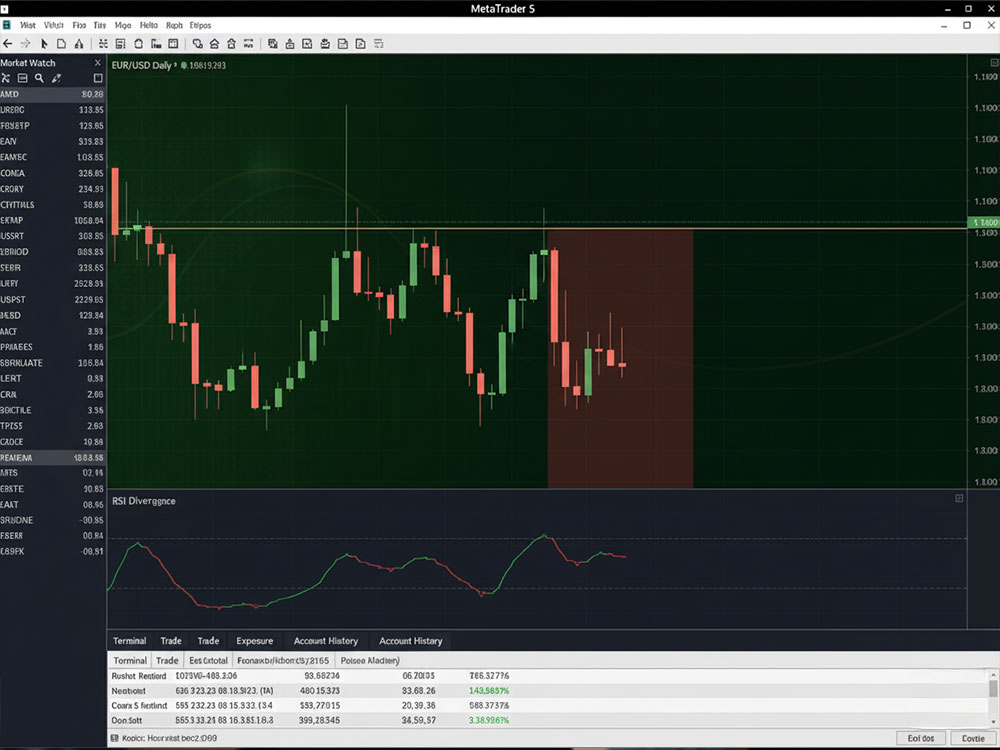
Example: Combining Bearish Patterns in Action
Let’s say EUR/USD is in a strong uptrend and approaches a weekly resistance zone. A shooting star forms on the daily chart, followed by a bearish engulfing candle the next day. RSI also shows divergence.
Here’s how to trade this bearish pattern chart setup:
- Confirm the pattern near resistance.
- Wait for the engulfing candle to close.
- Enter short with a stop above the engulfing high.
- Target the next support level for a 2:1 reward ratio.
- This combination of multiple bearish reversal patterns with confluence offers a strong probability of success.
Common Mistakes to Avoid With Bearish Charts
Even strong bearish candlestick patterns can fail if used poorly. Avoid these pitfalls:
- Ignoring context - Patterns mean little in sideways markets.
- Skipping confirmation - Wait for the close or follow-up candle.
- Using small timeframes - Stick to 4H or Daily charts for clarity.
- Forcing patterns - Don’t call every big candle a “signal.”
- Poor risk management - Always define stop-loss and reward targets.
Why Bearish Candlestick Patterns Work
Markets are built on crowd psychology. These bearish reversal patterns capture that shift — fear replacing greed.
Each bearish candle is a record of that emotional swing.
- The long wicks show rejection.
- The bodies show conviction.
- The sequences show transition from buying to selling pressure.
That’s why these setups work across every market - human behavior doesn’t change.
Extra Tools to Confirm Patterns
To refine your entries and avoid false signals, pair bearish candlestick patterns with:
- Trendlines: Confirm the break or rejection at major levels.
- Fibonacci retracements: 61.8% and 78.6% levels often align with reversals.
- Moving averages: The 21 or 50 EMA acts as dynamic resistance.
- Supply zones: If a bearish reversal candlestick forms inside one, the odds of reversal increase.
- Multi-timeframe analysis: A bearish signal on the daily chart that aligns with a 4H rejection is far stronger.
When to Ignore a Bearish Pattern
Sometimes, even a perfect bearish pattern chart shouldn’t be traded:
- The trend is too strong to reverse.
- The pattern forms mid-range with no clear level.
- Volume is low and volatility flat.
- The next candle fails to confirm.
Patience pays. Wait for clear alignment before entering.
These five bearish reversal candlestick setups consistently help traders catch market tops and protect profits.
Conclusion
Bearish candlestick patterns remain one of the simplest yet most powerful tools for predicting reversals. They tell the story of market emotion - optimism fading and selling pressure building.
When combined with resistance zones, volume spikes, and confirmation candles, they can help traders identify high-probability entries with precision.
The five patterns covered which are Bearish Engulfing, Shooting Star, Evening Star, Dark Cloud Cover, and Hanging Man appear across markets and timeframes.
Use them alongside smart risk management, and you’ll trade with confidence instead of guessing.
If you want to test these bearish reversal patterns on live charts, Dominion Options offers the perfect setup: tight spreads, lightning-fast execution, and support for advanced trading platforms like MT5 making it easier to execute your strategy without delay.
Understanding how to read each bearish candle gives you a real trading edge. Patterns don’t predict the future, but they reveal the truth about momentum. And in trading, that’s often enough to spot a reversal before everyone else does.
FAQs About Bearish Candlestick Patterns
1. What are bearish candlestick patterns?
These patterns show when buyers lose control and sellers start to push prices down. They usually form after an uptrend and warn that a reversal could follow.
2. How do you confirm a bearish reversal candlestick?
Wait for the candle to close near resistance. If volume rises or the next candle stays red, it’s a stronger sign the reversal is real.
3. What is the strongest bearish pattern?
The bearish engulfing pattern stands out. It shows a complete shift from buyers to sellers within one move.
4. Can bearish candlestick patterns fail?
Yes. Sometimes the market keeps rising. Always check key levels and place stop-losses to limit risk.
5. Do bearish reversal patterns work on all timeframes?
They work anywhere, but signals on the 4H or daily chart tend to hold more weight.
6. What’s the difference between a bearish candle and a bearish pattern?
A bearish candle is one red candle showing price dropped. A bearish pattern is a group of candles that together hint at a bigger reversal.
7. Are these patterns useful in forex trading?
Yes. They work well on major pairs like EUR/USD or gold when used with support and resistance zones.