What Is an Order Block in Forex? Beginner’s Guide to Smart Money
Introduction
Trading the forex market is not easy. Prices move fast, and many traders struggle to keep up. The market is driven by the actions of large players. Banks, hedge funds, and institutions place trades worth millions. Their orders often guide where price goes next.
Retail traders, who trade much smaller amounts, often follow the footprints left by these big players. One way to see those footprints is through order blocks. For traders seeking low-cost conditions, brokers like Dominion Options offer raw spreads and tight 0.1 pip pricing, making it easier to trade around these zones.
Understanding the concept of order block in forex can help you see where smart money is active. This guide explains what is order block in forex, why it matters, and how to trade it.
What Is an Order Block in Forex?
An order block in forex trading is a price zone where big traders placed large orders. These are not single trades. They are clusters of buy or sell orders spread across a small range. Institutions use this method to avoid moving the market with one huge order.
When these orders hit the market, they leave a mark on the chart. Price often reacts strongly around these zones. That reaction can be a sharp rise, a sudden drop, or a pause before a breakout.
In short: an order block is a footprint of smart money. Knowing what is order block in forex trading is a step toward reading charts the way institutions do.
Why Institutions Use Order Blocks
Large traders cannot enter a position with one big order. If a bank tried to buy billions in one go, the price would spike. That would hurt their entry and alert others. To hide their activity, they split orders into smaller parts.
These smaller orders build up in zones on the chart. You can spot these zones if you study order block in forex and look for key signs. They reveal where smart money may be active. When price reacts around these zones, it often shows where large players entered or defended positions, giving retail traders a chance to spot high-probability areas on the chart.
Why Order Blocks Matter
For retail traders, an order block in forex trading shows where the big players act. These zones often line up with support and resistance levels. If price moves back to a block, it often reacts again.
Key benefits of forex order blocks:
- They mark areas of high interest for large traders.
- They often trigger reversals or strong moves.
- They can help set stop losses and take profits.
- They improve trade timing when combined with other tools.
By watching order blocks, you align your trades with smart money.
Types of Order Block in Forex
Types of Order Block in Forex
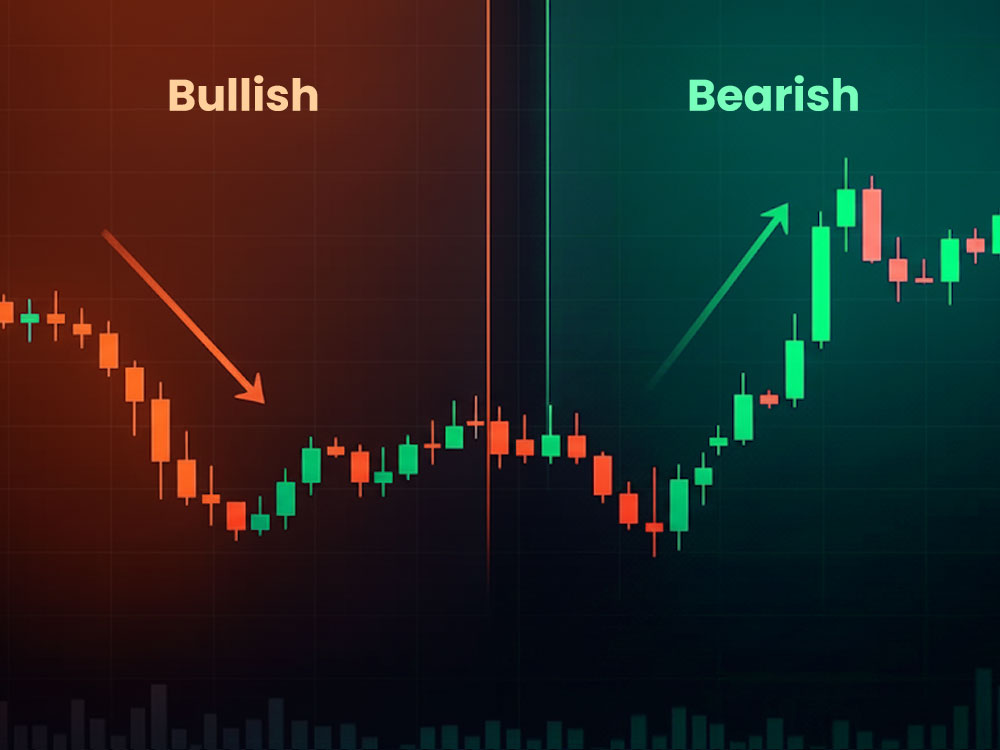
There are several types of order block in forex. Each type plays a role in how price moves.
Bullish Order Block
- Found after a drop in price.
- Shows where big buying stepped in.
- Acts as a support zone.
- Price often rises when it revisits this block.
Bearish Order Block
- Found after a rise in price.
- Shows where heavy selling began.
- Acts as a resistance zone.
- Price often falls when it revisits this block.
Breaker Block
- Forms when price breaks through a previous block.
- The old block often flips roles.
- Support turns into resistance or the other way around.
Rejection Block
- Forms when price tries to break a block but fails.
- Shows strong pushback by big traders.
- Often signals false breakouts.
Vacuum Block
- An area with little trading.
- Price moves through fast, leaving an imbalance.
- These gaps can later pull price back to fill them.
Learning the types of order block in forex makes it easier to know how to identify order block in forex charts and trade them with confidence.
How to Identify Order Block in Forex
How to Identify Order Block in Forex
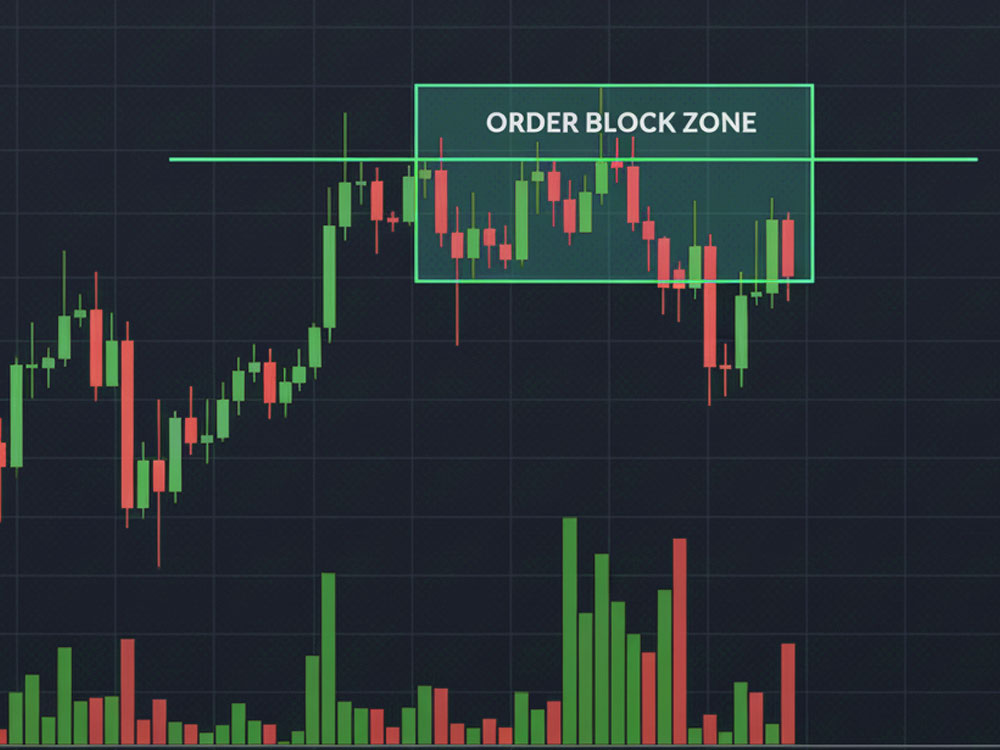
Spotting order blocks takes practice. Here are common signs:
1. Strong Move After a Zone
Look for areas where price paused and then made a sharp move. This could be a rally, drop, or breakout. That pause before the move often marks the block.
2. Clusters of Candles
Watch for a group of candles in a small range before a strong move. The last bullish or bearish candle before the move often defines the block.
3. Volume Clues
High volume often appears when smart money is active. Use indicators like On-Balance Volume, Volume Price Trend, or Klinger. They confirm strong activity around the block.
4. Liquidity Sweeps
Smart money often pushes price past old highs or lows before reversing. This clears out stop orders and collects liquidity. If you see this, you may have found a valid block. To understand how margin pressures can trigger forced exits, review our guide on Margin Call in Forex.
5. Price Imbalance
A sharp move away from the zone often leaves thin trading areas. These gaps, or imbalances, add weight to the block.
6. Support and Resistance
Blocks often form near strong support or resistance levels. If you see repeated bounces at a level, it may be an order block. Using an indicator for support and resistance also helps confirm these zones. In fact, choosing the best currency pairs to trade in forex also helps focus on setups that work well with order block zones.
Mastering how to identify order block in forex takes practice and patience.
Valid vs. Weak Order Blocks
Not all blocks are equal. Some are stronger than others. A valid order block often shows:
- A liquidity sweep before forming.
- A sharp move away that creates imbalance.
- No retests yet (unmitigated).
A weak or fake block may show:
- No liquidity grab.
- Smooth, weak movement after.
- Already retested and filled.
- No strong reaction on return.
Knowing the difference is key to better results when applying order block in forex strategies.
How to Trade Order Blocks
Trading with order blocks involves a step-by-step plan.
Step 1: Identify the Block
Use higher timeframes like 4-hour or daily for stronger signals. Mark the last bullish or bearish candle before a strong move. Draw the block as a zone.
Step 2: Wait for Price to Return
Price often comes back to the block later. Be patient. Do not enter until price revisits the zone.
Step 3: Look for Confirmation
When price touches the block, watch how it reacts. Signs include:
- Reversal candlestick patterns (engulfing, hammer, shooting star).
- Long wicks showing rejection.
- Support or resistance holding firm.
Step 4: Enter the Trade
- If bullish block holds → consider long.
- If bearish block holds → consider short.
Step 5: Place Stop Loss
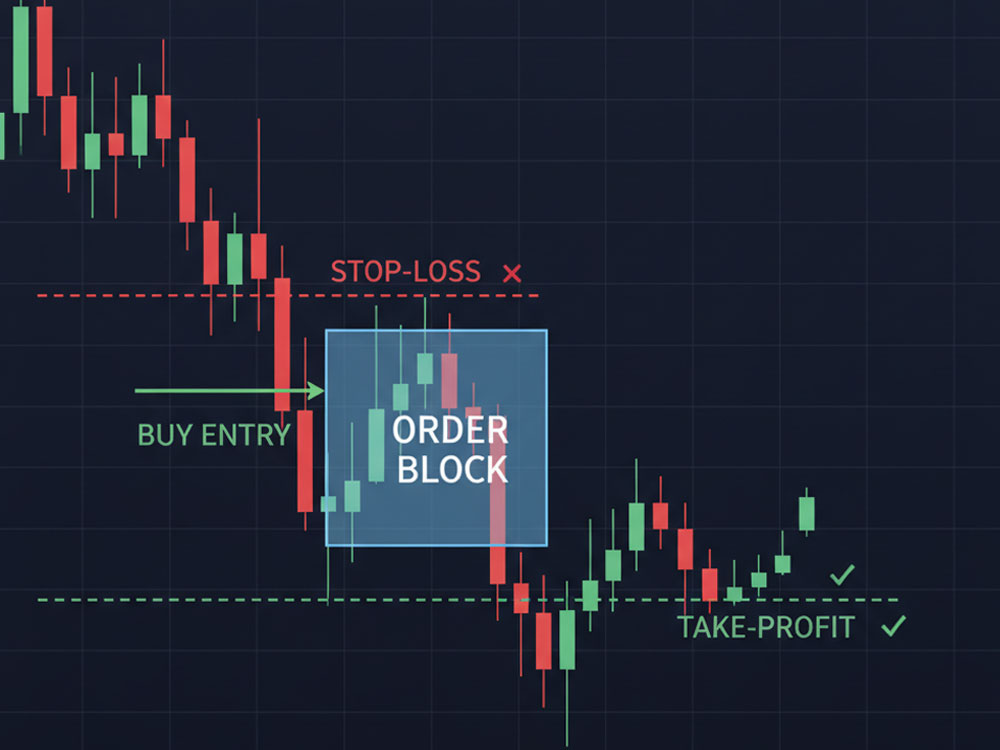
Always protect your trade. Place the stop just beyond the block. If long, below the zone. If short, above the zone.
Step 6: Take Profit
Set targets at the next support or resistance level. Or use a risk-reward ratio (2:1 is common).
Step 7: Manage Risk
Do not risk more than you can afford. Combine blocks with other tools like trendlines, RSI, or MACD for higher odds.
This routine blends the concept of order block in forex trading with practical trade skills.
Examples of Using Order Blocks
Examples of Using Order Blocks
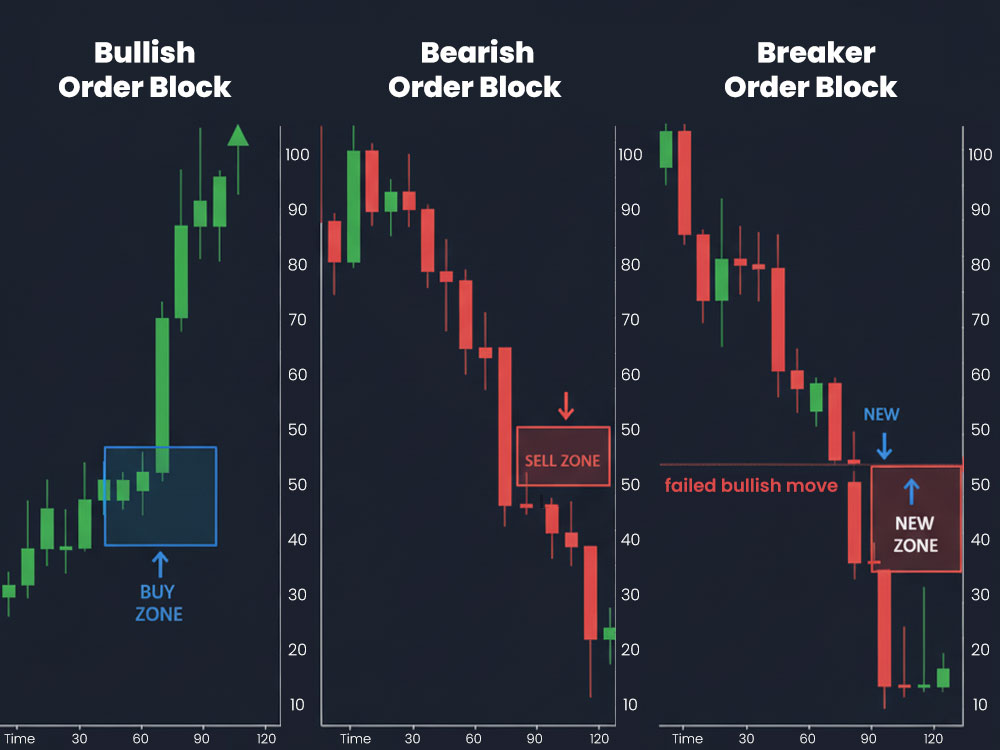
Example 1: Bullish Block
- Price falls into support.
- A cluster of candles forms.
- Price then rallies sharply upward.
- When price returns later, it bounces from that block again.
- A trader can buy there with stop below.
Example 2: Bearish Block
- Price rallies into resistance.
- A small pause forms before a sharp drop.
- That pause is the bearish block.
- Later, price retests and drops again.
- A trader can sell there with stop above.
Example 3: Breaker Block
- Price breaks through a bullish block.
- The same zone later acts as resistance.
- Traders short when price retests. To better understand entry types, see our article about Buy Stop vs Buy Limit.
Mistakes to Avoid
New traders often misuse order blocks. Common errors:
- Marking every cluster of candles as a block.
- Ignoring volume and liquidity signs.
- Trading blocks on very low timeframes.
- Entering without waiting for confirmation.
- Skipping stop losses.
Avoid these mistakes to trade smarter. Traders who use fast setups may also benefit from reading about scalping strategies in forex.
Order Blocks vs. Supply and Demand
Order blocks and supply-demand zones look similar. Both show where buyers or sellers are strong. The key difference is focus:
- Supply/Demand Zones: broader areas where price reversed before.
- Order Blocks: narrower zones tied to institutional activity.
Many traders use both together for stronger setups.
When Order Blocks Work Best
Order blocks are more reliable in certain conditions:
- In markets with strong liquidity.
- During clear trends.
- On higher timeframes.
- When confirmed by other signals.
They are less reliable:
- During news events.
- In choppy, sideways markets.
- On very low timeframes.
Risk Management With Order Blocks
Risk Management With Order Blocks
No trade setup is perfect. Order blocks can fail. Good risk management is vital. Learn more in leverage trading strategies for beginners. You can learn more about avoiding forced closes in our guide on margin call in forex.
Risk Management Tips
- Use stop losses beyond the block.
- Risk only a small part of your account.
- Target realistic profits.
- Do not chase trades if the block is already tested.
- Track results and refine your approach.
Trading is about survival first, profits second.
The Role of Smart Money
The idea of order blocks comes from the concept of smart money. Smart money refers to the actions of large, informed traders. They move markets. By learning to spot their footprints, retail traders can ride along.
You may not know the reason behind their trades. But the blocks they leave give you clues. Following them does not mean copying every move. It means aligning with their strength, not against it.
This mindset is a key part of mastering what is order block in forex trading.
Practicing With Order Blocks
Reading about order blocks is not enough. You need practice. Here are tips:
- Backtest on old charts. Mark zones and see how price reacted.
- Start with higher timeframes for clarity.
- Use demo accounts to practice live.
- Keep a trading journal of each block trade. Note what worked and what failed. For structured testing, see our guide on backtesting on MetaTrader.
The more you practice, the better your eye becomes at spotting and trading order block in forex trading. For more basics, check our beginner guide on how to trade forex.
Key Takeaways
- An order block in forex trading is a zone where institutions place large trades.
- They act as support or resistance and often spark strong moves.
- Valid blocks show liquidity sweeps, sharp moves, and no retests.
- Use them with other tools and always manage risk.
Conclusion
Order blocks are powerful tools for forex traders. They show where big money acts. Learning them improves your trade entries, exits, and risk control.
For beginners, the goal is not to master them overnight. Start with basics: spot the blocks, watch price behavior, and confirm with other tools. Keep trades small until you build confidence. If you want to understand how high leverage changes outcomes, read how can leverage impact your trading.
Forex trading brokers like Dominion Options also support beginners with raw spreads, tight 0.1 pips, and 500:1 leverage, which can make trading more efficient when managed responsibly.
Smart money moves the market. By learning what is order block in forex, you trade with the institutions instead of against them.